
THERE IS TIME TO PAUSE, TOO
Sharing the day.
Finding calm.
A home with an Australian Shepherd can have quiet moments too. At Lunamar, scenes inspired by Sky and Dylan accompany this guide to preparing those moments: observing, allowing space and following each dog’s pace.
See the first steps When excitement builds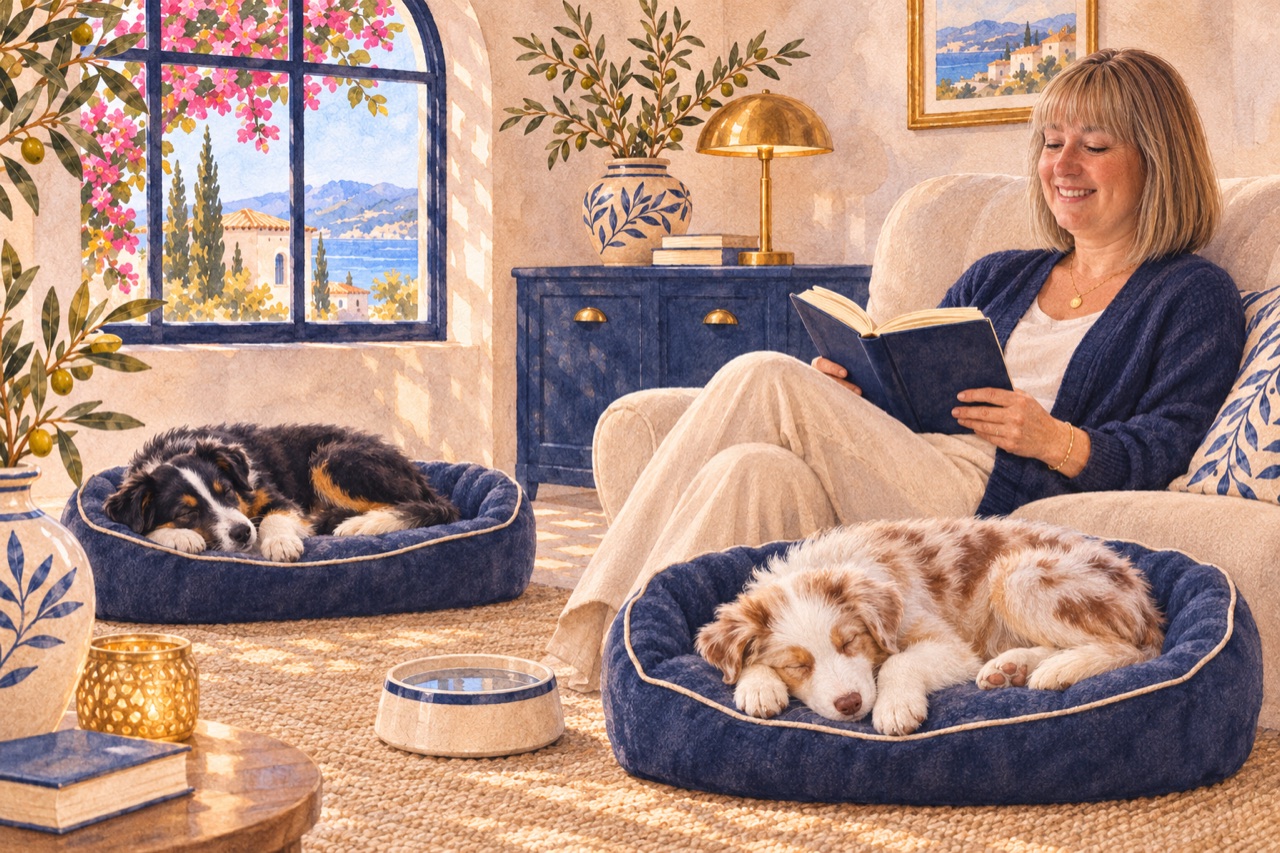
Helping them through an overly intense moment[3][6][7]
Read the whole situation
An Aussie running, jumping or mouthing more does not tell you exactly how they feel. Excitement, tiredness, frustration or discomfort may be involved. Consider what happened beforehand and how they recover.
Change the setting
Ease off intense play and find somewhere with less movement and noise. Make space from whatever excites them. A break should not become punishment or distressing confinement.
Leave simple options
Check water, toilet needs and comfort. Offer sniffing if enjoyable, or quietly stay nearby without demands. Inspired by Sky and Dylan, remember that two dogs may need different breaks and spaces, without competing for food.
Learn when it is easier
Keep mat practice for a receptive moment. Notes about triggers and recovery help you adapt the routine. There is no requirement to achieve calm within a set number of minutes.
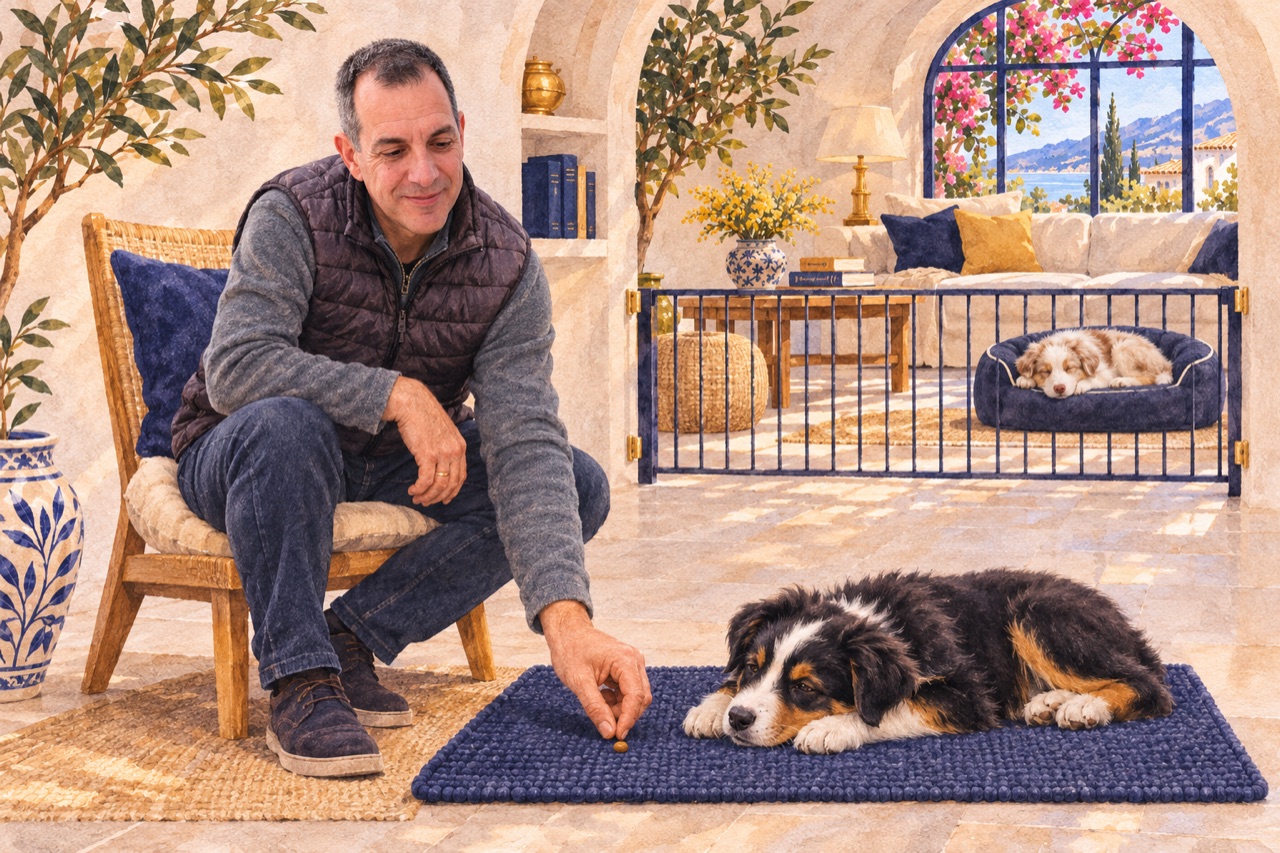
A blanket as an invitation to slow down[1][2][3]
Let them discover it
Choose a comfortable, quiet spot and lay down a blanket. Let your dog investigate or leave; it is an opportunity, not a place for restraint. You can sit nearby.
Support comfortable choices
Initially acknowledge approaching or getting comfortable. You can quietly place a tiny food reward on the mat without calling them over to collect it. Include rewards in their daily diet.
Watch the posture, not just the place
Notice a loosening body, a resting head or attention moving away from you. Deliver food gently. If anticipating it increases excitement, reduce the intensity or stop practising.
Take one small step at a time
Try a minimal wait or a gentle movement around the room without combining challenges. If they leave, check their needs and return to something easier. Finish well before frustration.
Calm is about how they feel, not just where they lie[1][6]
Lying down can be a learned behaviour without relaxation. Watch your dog’s body and surroundings. Getting comfortable or choosing another position also counts; they need not sleep every time or maintain a rigid posture to succeed.
| An invitation that is working | A reason to change the plan |
|---|---|
| They get comfortable, stay loose and can move away. | They stiffen, watch constantly or try to leave. |
| They stop following your every movement. | They continually expect food or become frustrated. |
| They can sleep without being disturbed. | We ask for participation when they need rest. |
Their own spot, even while we are together[1][3]
Pick somewhere away from constant traffic and reduce noise or play nearby. Agree that a resting dog is left undisturbed, including by other animals. Barriers only help when safe, introduced gradually and tolerated without distress. Practising need not mean separating the puppy from you.
Balance the day without chasing exhaustion[3][4]
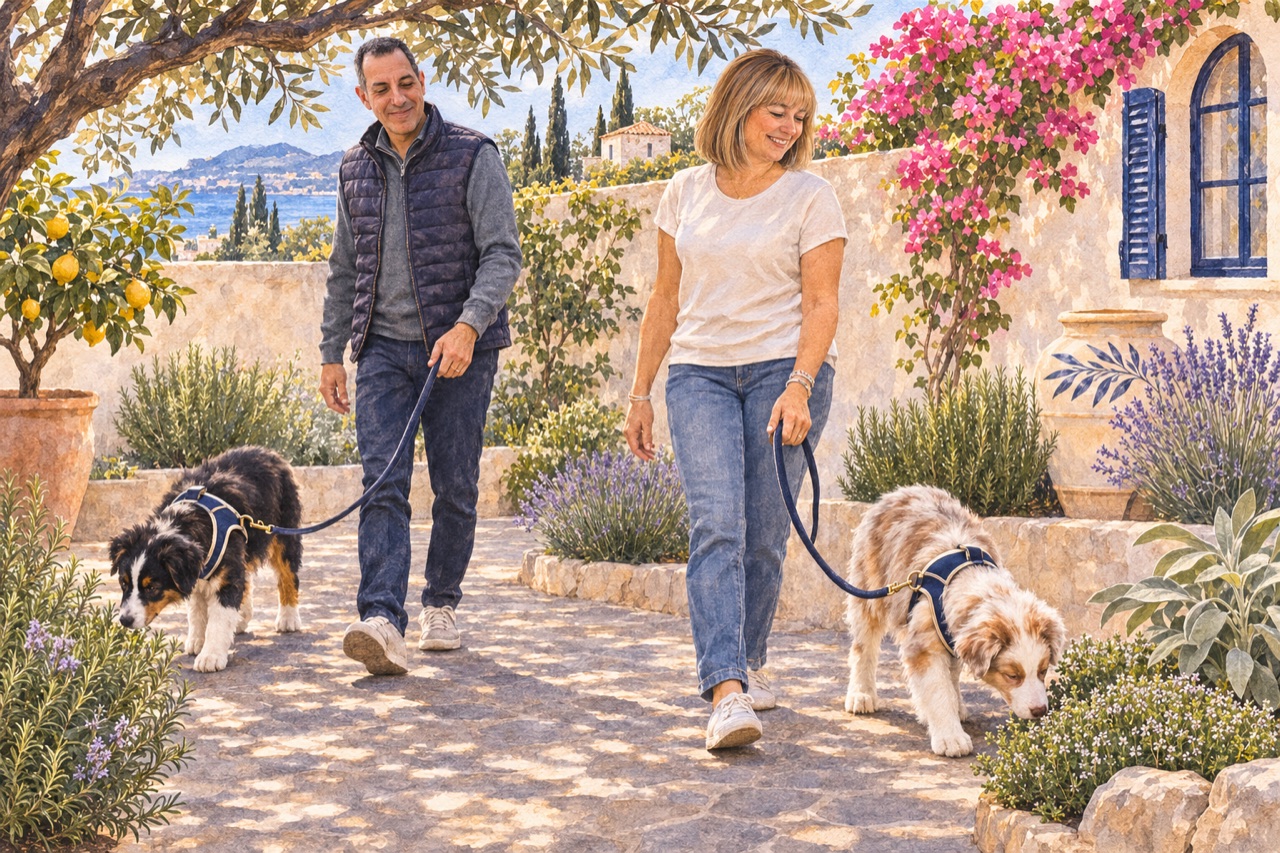
A sniffing walk, suitable play or a simple learning activity can sit alongside pauses. Watch your dog’s response: more intensity does not always help rest. Avoid repeated running or throwing games to exhaust them. Match activity to development and health, seeking veterinary guidance as needed.
Finding their rhythm[3][6]
Their body loosens, they adjust position comfortably and can disengage. Quiet company is enough. If they sleep, do not wake them with another reward.
Needing a different setting[3][6]
Persistent restlessness, tension, avoidance or panting without heat or effort call for a review. Read signals together: yawning alone cannot distinguish tiredness from discomfort.
An active Aussie needs support to switch off too[3][4][5]
The Australian Shepherd’s working history helps explain interest in learning and movement. Each dog still has their own pace. Sky and Dylan illustrate this guide rather than setting a standard for all dogs. Offer movement suitable for growth, thinking and sniffing opportunities and protected rest. There is no need to fill every moment or use chasing people or bicycles as entertainment.
Your family preparation list
Frequently asked questions
Can I practise while working from home?
Begin when you can observe and adjust. Later, add small tasks of your own while your dog remains comfortable. Do not expect a whole working day from the outset.
Does this teach being alone too?
Resting with you nearby may help provide a foundation, but cannot replace gradual absence training. Do not leave a distressed puppy crying to get used to it.
What if the mat does not interest them?
Review the place, comfort and timing. They may prefer another surface or need something first. Do not force or hold them on it; start where they feel comfortable.
Should an Australian Shepherd who cannot switch off get more tiring exercise?
Do not assume so. Appropriate activity and opportunities to rest both matter. A sudden or persistent change, or apparent pain, needs a veterinary health review before adding exercise.