
A PLACE FOR EVERYONE
Live together.
Let bonds develop.
At Lunamar, we see a household as several relationships, each needing time and care. Educational scenes inspired by David, Cristina, Sky and Dylan show ways to share a home with individual space.
Plan living together
Adults keep the responsibility[1]
When a child and dog are together, someone must watch attentively, stay close and be able to act. Cooking or answering the phone beside them is not active supervision. Use separate areas and safe barriers when attention is divided. This applies to babies and visiting children, even with a familiar, usually calm dog.
Sharing does not require touching[1]
Teach children to let the dog choose to approach and not follow when they leave. No hugging, kissing, faces beside muzzles, pulling, climbing on or chasing. Meals, toys, sleep and rest should be undisturbed. Reading or another quiet activity beside an adult, at a distance from the dog, can build positive moments too.
Value small signals[1][2][9]
Turning the head, moving away, lip licking or tension can ask for a break; read body and context together. A wag does not always mean comfort. Offer space before the dog has to insist. Never scold growling or recreate the situation as a test. Children should not manage corrections or take food away.
A new dog changes the household[5]
Arrange short introductions with adults, space and ways to withdraw. Quiet neutral ground and slack leads may help when appropriate; agree puppy health precautions with your vet. At home, each needs separate meals, bedding and breaks. Remove competition and separate if one persists or avoids the other: allowing a fight is not a way to teach companionship.
A family agreement before meeting[1][3][4][5][8][9]
Allocate spaces and responsibilities
Decide which adult watches and how to separate if they must leave. Prepare individual retreats and resources, and explain what children can do and should respect.
Choose an easy experience
Start calmly with plenty of space. Reward relaxed responses without luring anyone into unwanted contact with food. Finishing early can be a good outcome.
Watch the aftermath
Allow rest and notice changes in eating, sleep or willingness to approach. Welfare, rather than elapsed days, determines the next stage. Ask for help if more support is needed.
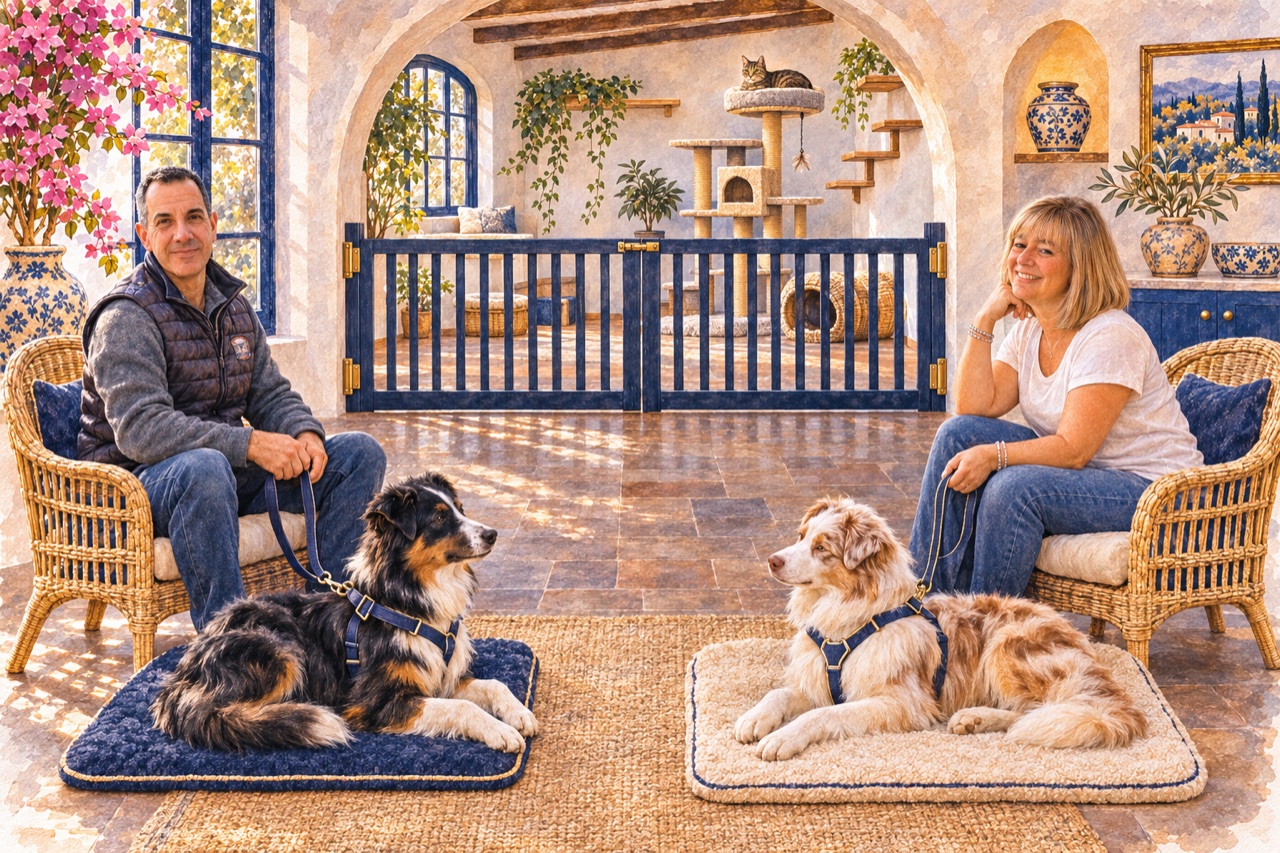
The cat needs control over distance[3][8]
Before meeting, provide a safe area with food, water, litter, hiding places and height beyond the dog’s reach. Introduce scents while staying separate. If both are comfortable, start with a barrier and dog on a loose lead, without holding the cat for a greeting. Prevent chasing practice. Fixation, lunging or fear calls for a step back and advice, without promised friendship or deadlines.
Less contact may suit small animals better[4]
For a rabbit, guinea pig, rodent or bird, a nearby dog may feel threatening even without touch. Do not bring the dog to a cage or hold the animal up to see what happens. Design physically separate areas, including during the small animal’s exercise, and ask for species-specific guidance. Keeping this separation permanently may be appropriate.
Sky and Dylan remind us of individuality
One dog’s calm response cannot predict the other’s. Introduce newcomers one at a time in multi-animal homes and observe every relationship. Do not depend on the confident dog to teach the others or require shared space when someone avoids it.
Watch movement around an Australian Shepherd[6][7]
Herding tendencies can influence some individuals that chase or try to gather others. Do not automatically call chasing play or normalise nipping children. Arrange activities without shared chasing and practise easy rewarded alternatives with space. Breed knowledge helps frame questions; it does not certify compatibility with a person or animal.
Seek support before repeating conflict[1][7][9]
Bites, threats, persistent chasing, guarding or ongoing fear call for safe separation and advice. Your vet should assess sudden changes and possible discomfort; a qualified professional can plan meetings. Do not put hands between fighting animals. Human bites need medical assessment, urgently for serious injury; injured animals need a vet. Do not try again without reviewing the plan.
Our household agreement
Frequently asked questions[1][4][8][9]
Can we stop watching a very affectionate dog?
No. An adult needs to observe and act; affection or a previous positive experience does not remove that responsibility. Separate safely when that is not possible.
Will everyone become friends?
Relationships may involve friendship, tolerance with space or incompatibility. Welfare and safety are the goal; some animals require permanent separation.
Does growling mean there is no solution?
You cannot draw that conclusion from a growl. It means stopping the situation, creating safety and assessing the cause. Do not punish or test again without suitable changes.