
SUPPORT THROUGH SHEDDING TOO
Each coat, its own rhythm.
Each care moment, trust.
Living with an Aussie means living with their hair too. At Lunamar, scenes inspired by Sky and Dylan help us discuss calm care: observing the coat, respecting skin and learning to cooperate without rushing.
Start with the brush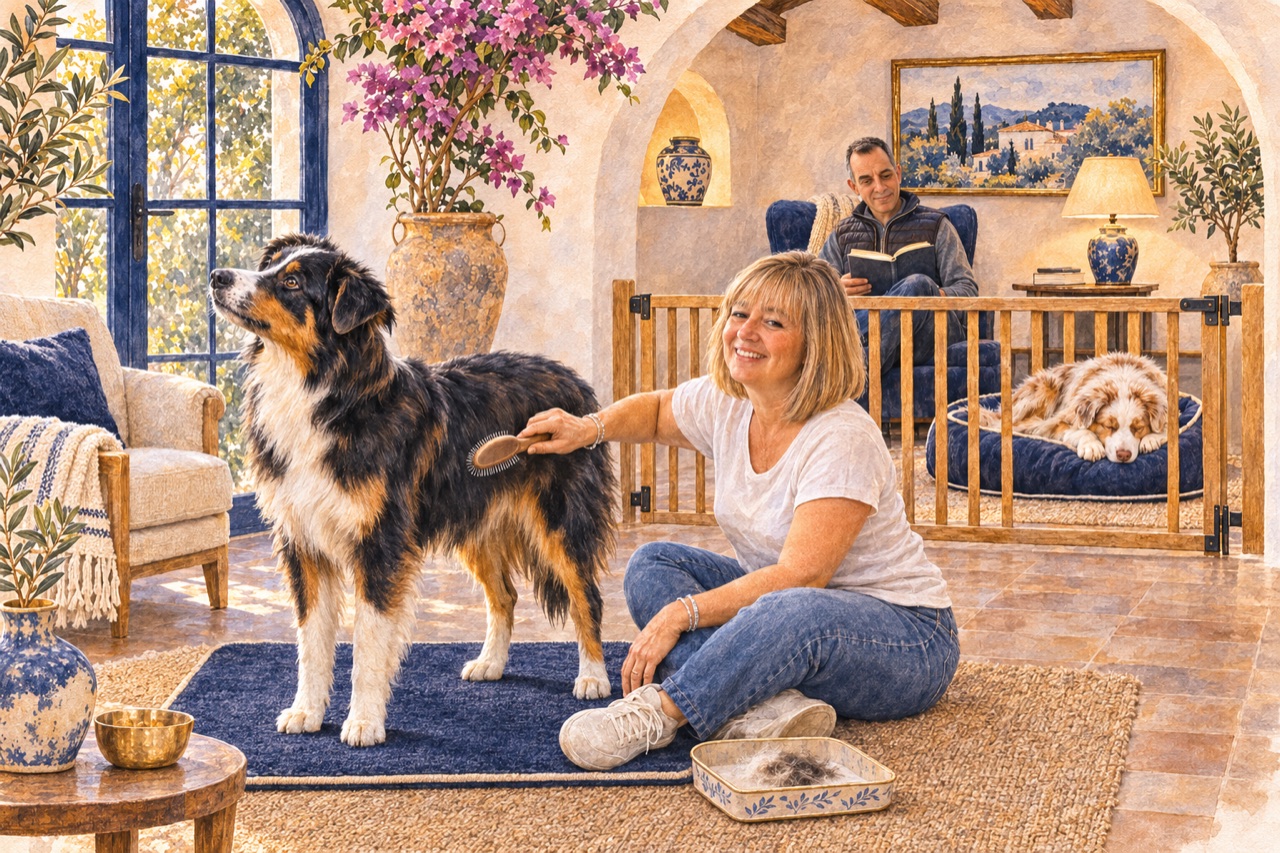
Understand the coat before working on it[1][2]
Under the Aussie’s outer hair lies a softer, denser undercoat. Quantity and texture are not identical in every dog. Preserving both layers and removing loose hair is different from reducing volume at any cost: aim for comfort and freedom from matting.
Hair at home: notice the pattern[1][3][4]
Coat renewal can leave hair throughout the year and become heavier at certain times. Each dog’s life and environment influence that pattern; families need not follow identical months. Brushing collects some loose hair but cannot make shedding disappear.
Simple equipment, used well[1][4][8]
Before buying many tools, ask for a demonstration suited to your dog’s coat. A double-coat brush and checking comb can make a useful starting set. Work in small areas, follow hair growth and avoid scraping skin. Give behind ears, armpits and feathering particular attention.
When the comb meets resistance[4][8]
There is no battle to win against a mat. If small and comfortable to loosen, work delicately. If it pulls on skin, covers a large area or hurts, stop and seek help. Do not cut it with scissors near skin; ask a professional to assess a heavily matted coat before wetting it.
Turn grooming into a small shared agreement[7][8]
The brush can wait
Show it in a familiar place, at a comfortable distance and on stable footing. Pair this first meeting with a small reward without starting to brush.
Try very little
A brief touch in a comfortable area, a reward and a break. Once accepted calmly, add a few gentle strokes. Finishing early can be a good result.
Listen to “not now”
Moving away, stiffening, avoiding contact or protesting means stop and simplify. Seek guidance before continuing if there is pain, persistent fear or bite risk.
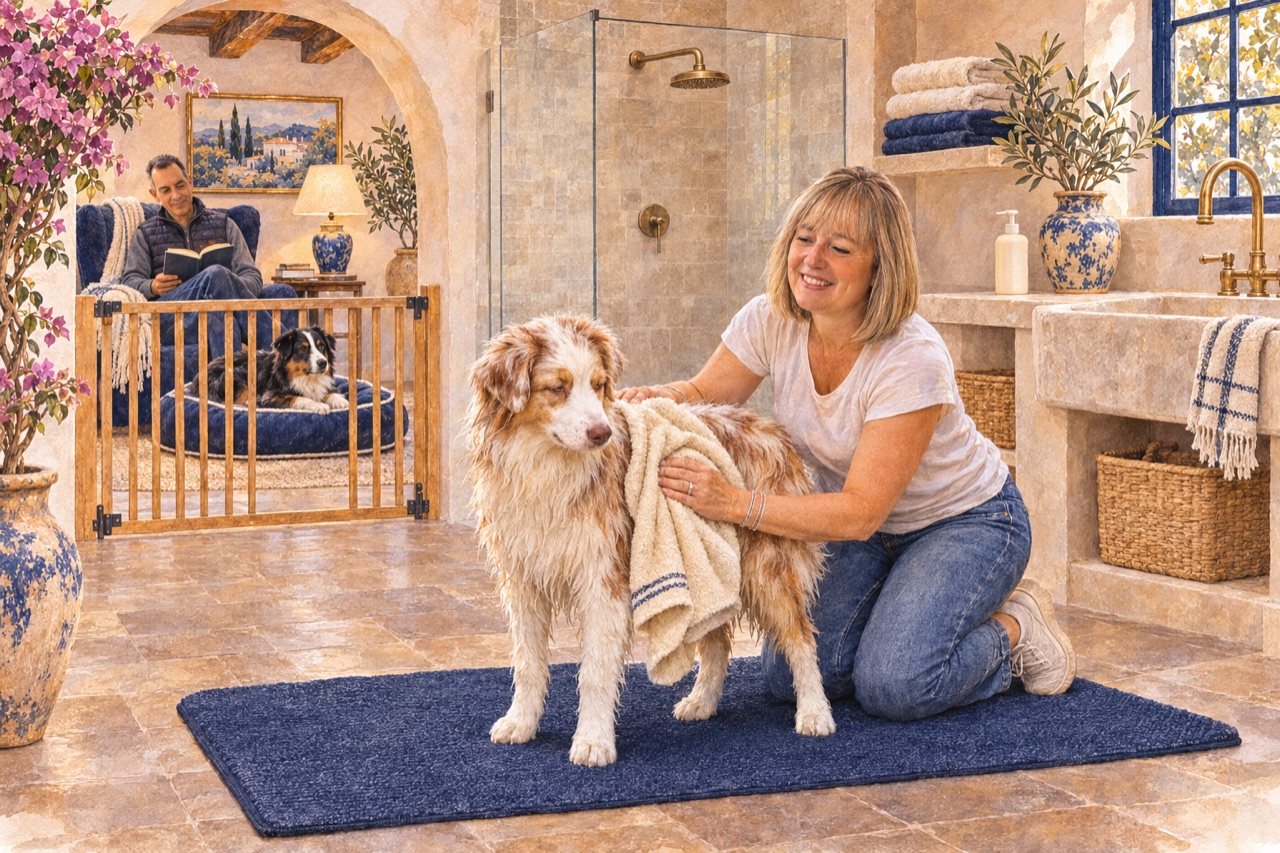
From bath to dry coat[4][5][8][9]
Choose timing according to dirt and skin needs rather than a calendar obligation. Prepare non-slip footing, lukewarm water and dog shampoo used as instructed; seek advice for treatment products. Rinse away residue without directing water or product into eyes or ears. Press with a towel and check that the undercoat dries too. If a dryer is accepted, use cool or low heat, keep it moving and away from the face, and always stay with your dog.
Preserve the coat, with considered exceptions[1][2]
Shaving does not prevent shedding and may alter regrowth. It is therefore not the usual answer for summer or household cleaning. Veterinary needs, lesions or severe matting that cannot be removed comfortably may require a different professional decision. Having a coat does not replace water, shade or avoiding exertion in heat.
Sky and Dylan: individual turns
Scenes with both remind us that care suits the individual. One can rest while the other receives attention; tools and frequency may differ. Keep equipment clean and ask before sharing it if either has a skin condition.
When a brush is no longer the answer[4][5][6]
Recent bald patches, ongoing itching, redness, wounds, scabs, unusual odour or pain call for a health check. So does a sudden change in hair loss alongside altered appetite or mood. Consult your vet before adding products, home remedies or more intense brushing.
Before you begin
Frequently asked questions[1][4][9]
Must we book a bath every month?
Not necessarily. Frequency depends on dirt, lifestyle and skin health. Returning odour or a constant need for washing calls for advice, rather than simply another bath.
What should we ask a groomer for?
Explain that you want to maintain a natural double coat and agree the work. Ask about handling, breaks and drying, and share any sensitivities or skin issues.
Will a product or haircut end hair around the house?
Supplements or shaving should not promise to eliminate natural shedding. Regular care helps manage it; worrying hair loss needs its cause assessed.