
A clear start together
A new life.
Their paperwork, explained.
Welcoming a Lunamar puppy also means understanding their documents. This guide takes you through what you will receive, what to check together and which steps to follow after collection.
Explore the five documents ↓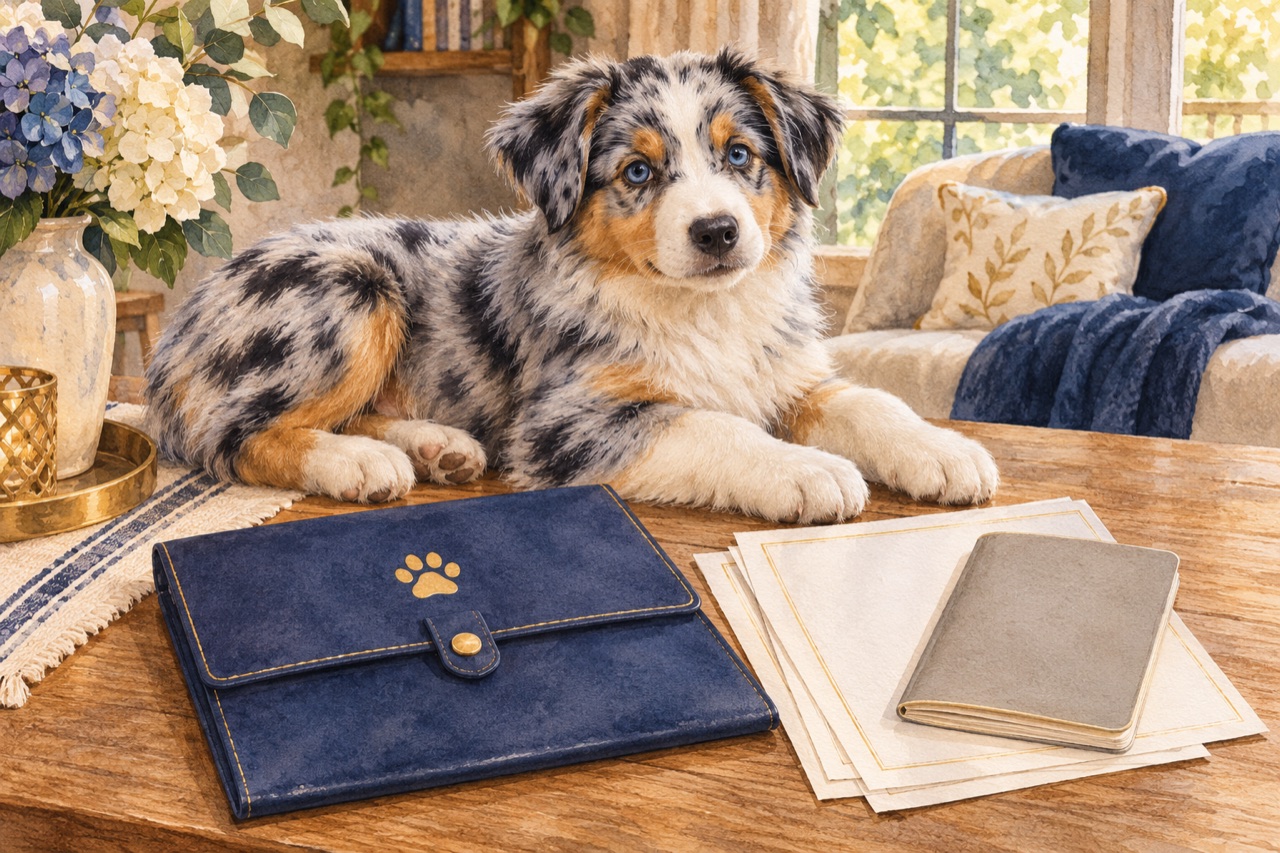
Time to understand every document.
When it is time to welcome your Lunamar puppy, we will give you their documents, go through them with you, answer questions and explain the next steps for your family.
Check your puppy’s name and microchip number alongside the people named as breeder, transferring owner or registered owner on each document. Appointment details are arranged directly with each family.
Two separate processes to keep clear
Vet · Microchip
Identification and contact details
Take the handover agreement and your puppy’s documents to your usual vet. They will help update microchip ownership and, where necessary, transfer registration to the system for your home address.
Go to the handover agreementRSCE · LOE and pedigree
Ancestry and ownership in the studbook
Changes to LOE/pedigree ownership follow RSCE procedures. This is separate from updating the microchip record at the clinic.
Go to LOE and pedigreeThe folder you take home
01 · Health and identification
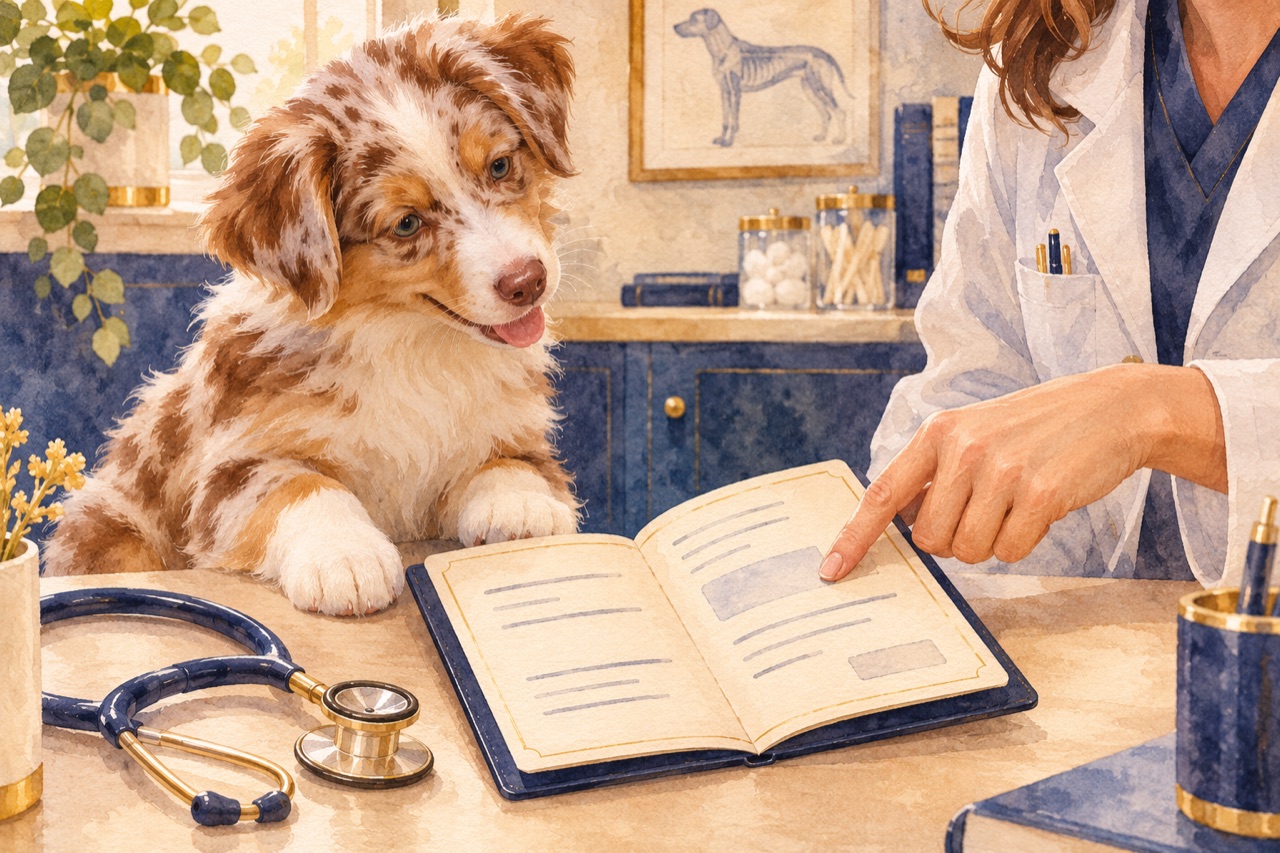
Passport: their health record[7]
The passport brings together your puppy’s identification and health entries made by the vet, including recorded vaccinations and treatments. You will use it as their health record at future appointments.
Bring it to your vet to review care already provided and plan what comes next. Check that the microchip number matches the other documents.
02 · With your veterinarian
Handover and ownership transfer agreement[1][2]
This is how our guide refers to the contract signed at handover: it records the agreed terms and identifies the puppy and the parties. The signed document keeps its legal title and content.
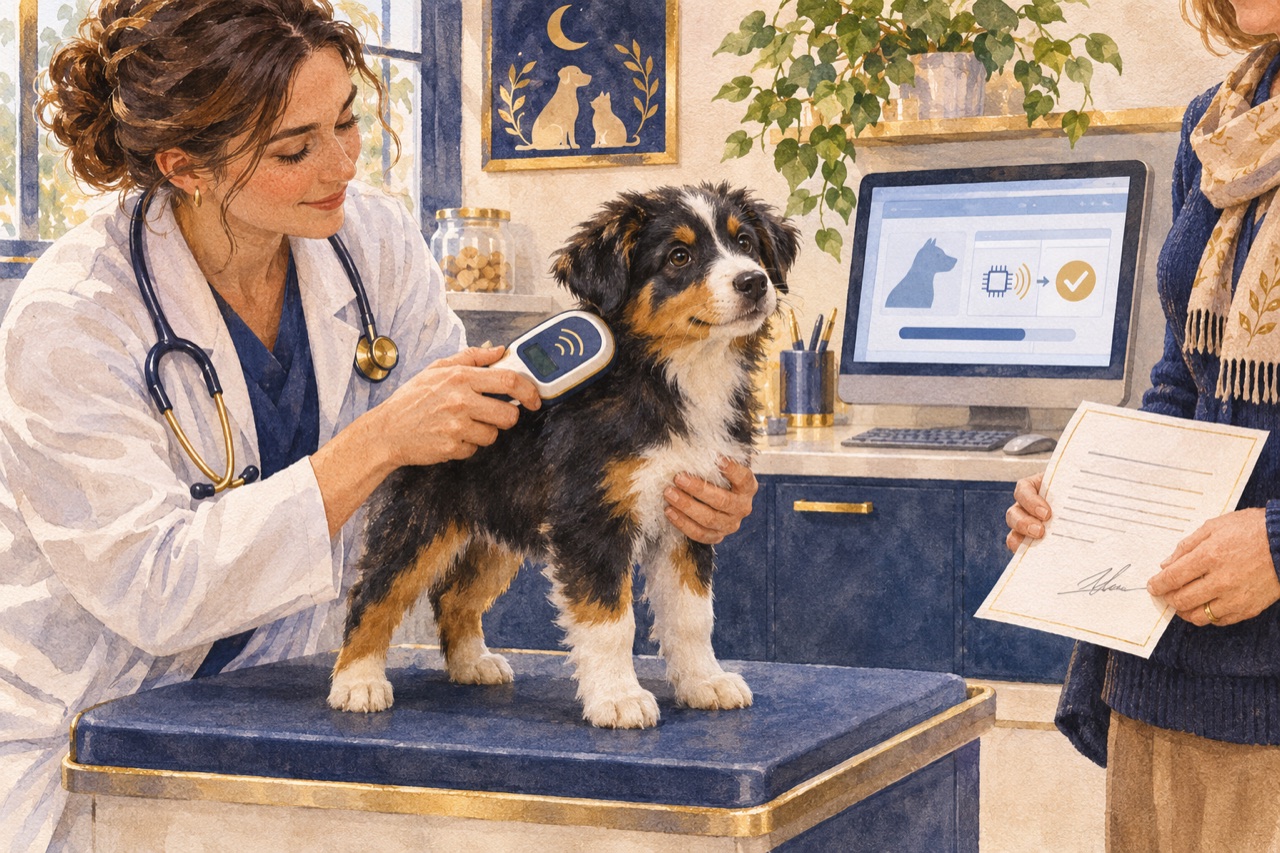
Take it to the clinic with the passport and your identification so the vet can arrange the microchip ownership update under the relevant registration system. Signing the contract does not itself update the database.
03 · Understanding their origins
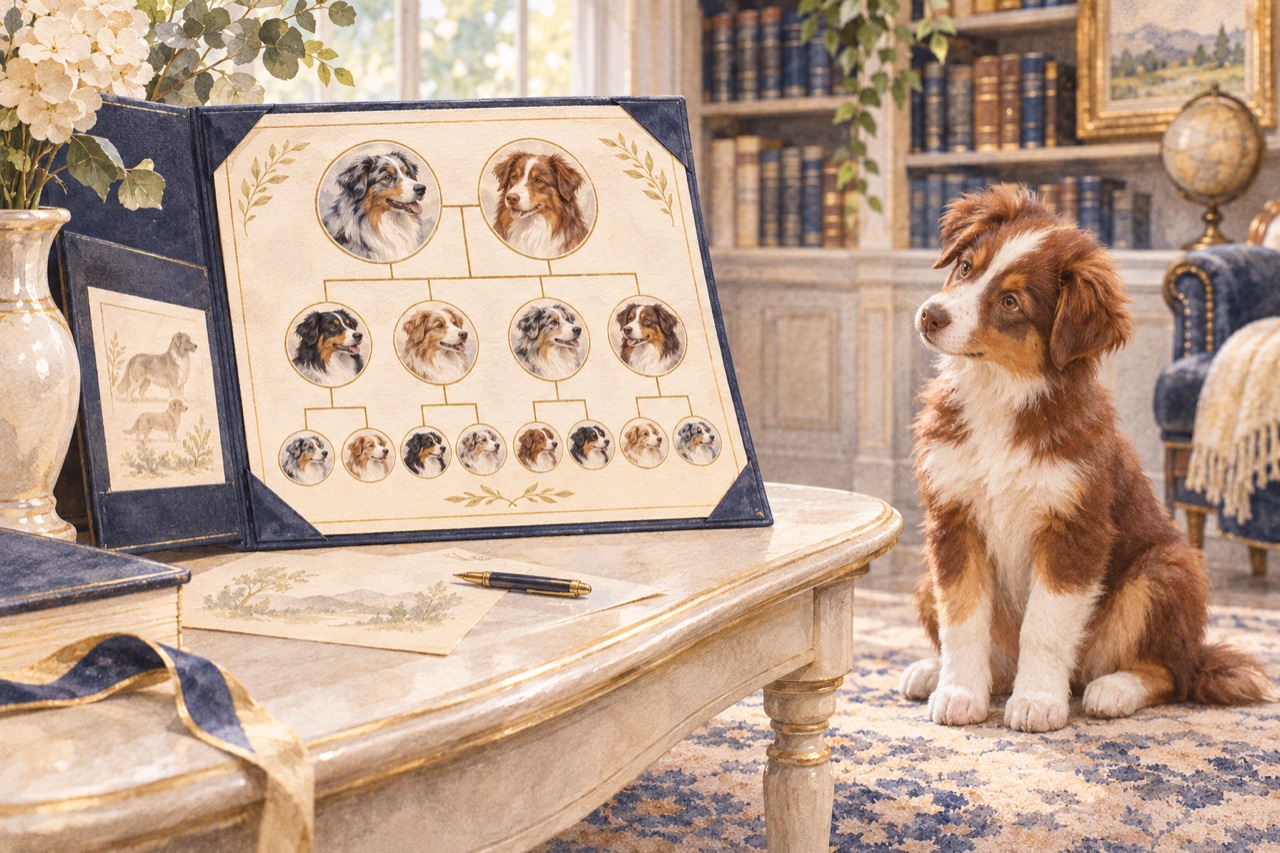
Provisional pedigree copy[3][5]
We will provide a provisional copy of the available ancestry documentation. It lets you check the puppy’s ancestry and registered details, including the breeder and owner shown on the document at that time.
Keep this copy and review the details with us. A pedigree certifies recorded ancestry; the LOE is the studbook in which it is registered. Neither is the microchip identification database.
04 · An RSCE process
LOE copy and transfer paperwork[3][4]
At handover, you will receive a provisional copy of the LOE registration confirmation and transfer paperwork bearing the signatures of the relevant transferring owners.
To complete the transfer and request a pedigree in your name, follow the current RSCE procedure. Confirm which original or valid digital document to submit, the required signatures and the applicable fee.

05 · Veterinary examination
Veterinary certificate[8][7]
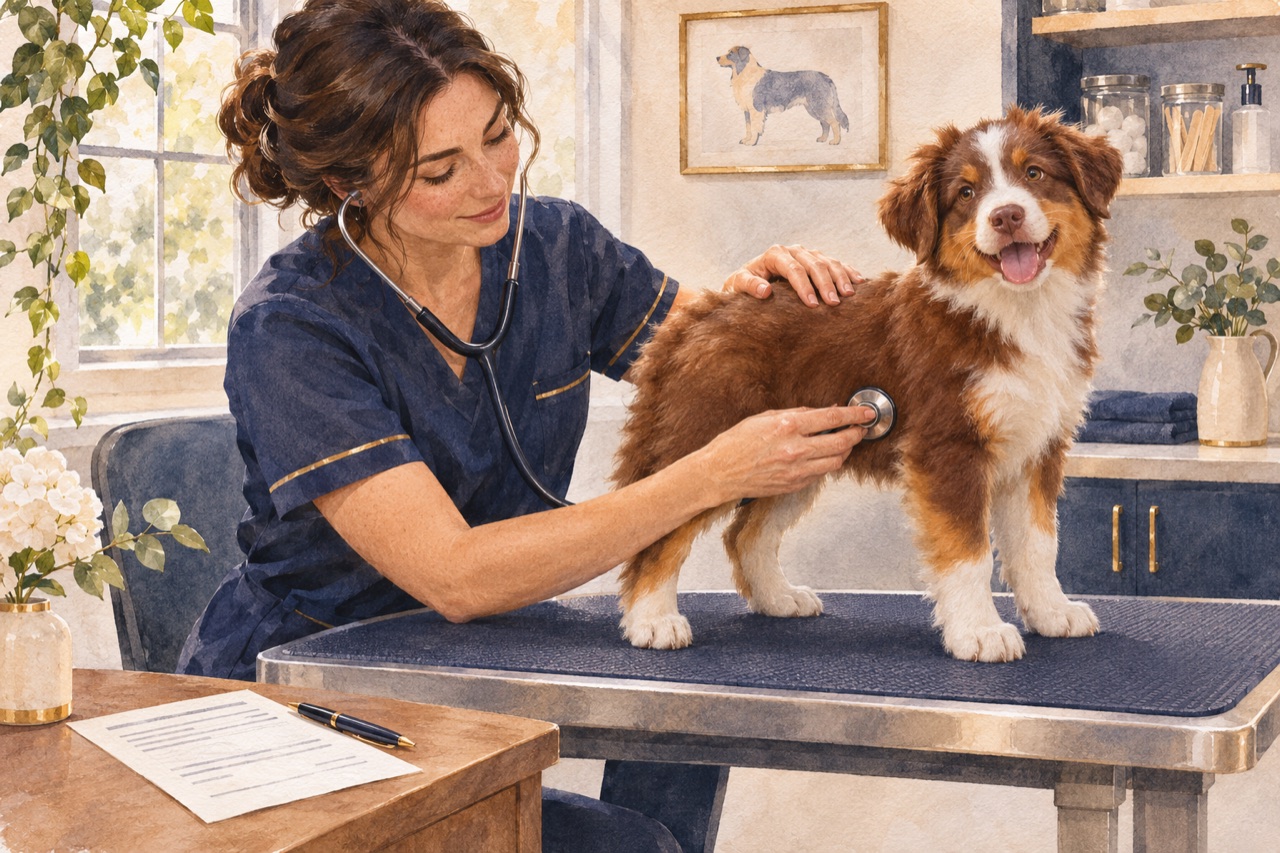
The certificate records what the vet certifies about your puppy following the examination stated in the document. Keep it with the passport to share that information with your own clinic.
Check the date, your puppy’s identification, and the professional’s details and signature. Discuss any observations or follow-up guidance with your vet.
Real Sociedad Canina de España
Lunamar works with the RSCE[3][4][6]
For our litters’ ancestry documentation, we work with the Real Sociedad Canina de España (RSCE). Other organisations have their own registers and procedures; this guide concerns the RSCE documents we provide.
The RSCE offers an online office and other application channels, including collaborating canine societies. Check the current route for your case; this guide does not mean you must visit Madrid in person.
Head office · Madrid
C/ de Maldonado, 56, Entreplanta
28006 Madrid · España
Before we say goodbye
A short check to leave with everything understood. Ticks stay while this page remains open.
Questions worth clearing up
Does the LOE change when the vet puts the microchip in our name?
These are different registers. Your vet handles identification under the relevant system; the ancestry ownership transfer follows the RSCE procedure.
Is a pedigree only worth requesting if we plan to breed?
A pedigree records ancestry and may interest you even if your dog is purely a family companion. For breeding or shows, also check the specific requirements; competitions do not all have the same entry rules.
What if we live outside Spain?
Tell us before collection. We will review your handover paperwork, and you should confirm health, identification and registration requirements with the destination’s authorities and vet. Ask the RSCE whether an export pedigree is appropriate.