
TRUST STARTS WITH NOTICING
Watch attentively.
Respond respectfully.
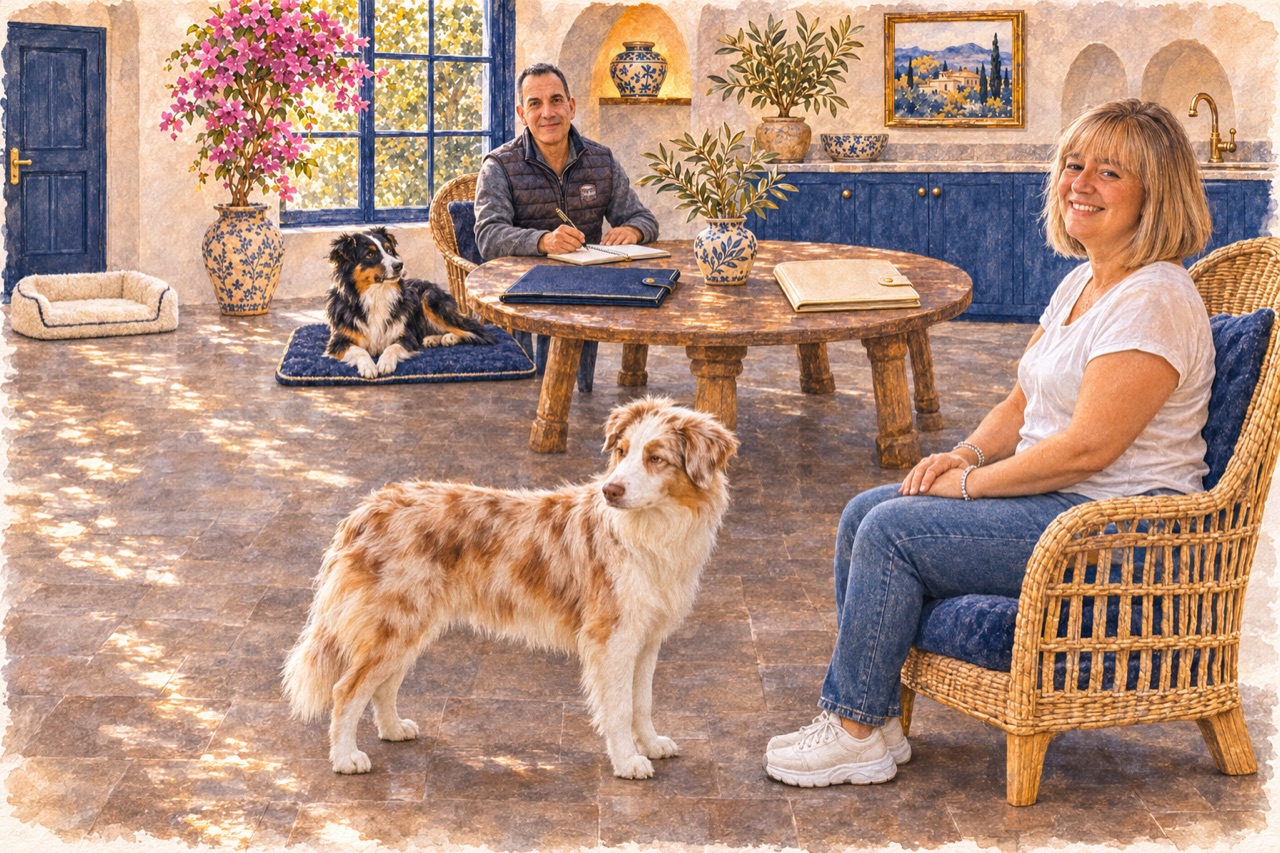
At Lunamar, we want to notice how each dog experiences home and walks. Scenes inspired by David, Cristina, Sky and Dylan invite observation without intrusion. Communication cannot fit into a gesture checklist: it changes with the individual, the setting and what has just happened.
Observe calmly
Know their usual way of being[1][3][4]
Before naming an emotion, learn how this dog looks when comfortable. Gather information from face, ears, tail, tension, weight and movement, alongside the surroundings. One photographed instant or isolated gesture cannot explain the experience.
Comfort leaves room for movement[1][2]
A loose appearance, soft expressions and ease in exploring, resting or shifting position may suggest wellbeing in that setting. Look for choice of distance. A motionless dog may be resting or feeling unable to move; stillness needs more context.
Listen before intensity increases[1][3][5]
Looking away, lip licking, yawning, retreating or lowering posture can accompany discomfort. They are not automatic labels: food and tiredness can explain some actions too. If they appear during contact or alongside tension, simplify and allow space before asking for anything else.
When the dog needs us to stop[1][3][4]
Rigidity, freezing, staring, visible teeth, growling or attempts to leave call for ending the situation and creating safe distance. Do not corner them, bring your face close or touch to test what happens. A growl is not punished; it prompts a review of the encounter. Warnings vary in order and may not all appear before a bite.
Observe, describe and support[1][3][5]
Find a simple scene
Choose a quiet awake moment without intruding on eating or resting. Do not create a fright or approach to make the dog display signals.
Keep facts rather than labels
Record what happened before, the visible body actions and what followed. A safe video may help; never repeat discomfort to capture it more clearly.
Offer an easier way out
Stop contact or gain distance when something seems uncomfortable. Put safety and comfort first; share recurring observations to help plan appropriate support.
Contact needs pauses and choice[1][4][5]
If the dog approaches seeking comfortable interaction, stroke briefly then keep hands still. They may ask for more or choose to leave; both responses matter. Do not follow, hug or use rewards to draw them towards a worry. Children require direct adult supervision; if unavailable, use safe separation without contact.
Playing together is not enduring everything[1][2][5]
Shared play may involve flexible bodies, invitations, pauses and turn-taking. Neither a bow nor one sound guarantees good play. If either seeks an exit, stiffens, hides or cannot rest from chasing, end it with safe separation. Do not wait for conflict to resolve itself or put hands between fighting dogs.
Sky and Dylan: individual ways of communicating
Both feature in the illustrations, but each needs individual observation. One dog approaching or wanting to keep playing does not define the other’s feelings. Provide rest and personal space, noticing especially the one withdrawing or outside the main interaction.
Read the Australian without shortcuts[1][3]
Coats hide details, and ears and tails vary in shape and length. Look for visible posture and movement without handling them to inspect signals. Light eyes or coat colour do not say how they feel. Intense watching of movement is not always a wish to play; know the individual rather than expecting a breed-guaranteed response.
Changes deserve veterinary attention too[1][5][6]
Different sleep or eating, less movement, limping, avoiding the brush or an unfamiliar reaction may relate to pain or health. Seek advice instead of simply calling it personality. With persistent fear, repeated growling or bite risk, avoid triggers and arrange individual reward-based support with veterinary coordination.
Our observation checklist
Frequently asked questions[1][3][4][5]
Does keeping still mean being calm?
Not necessarily. Posture, tension and surroundings help distinguish rest from freezing. When uncertain, reduce pressure and allow space.
Is showing the belly asking for strokes?
Sometimes it accompanies relaxed interaction; at other times discomfort. Do not treat it as automatic permission: consider the whole body and never force contact.
Can filming help us learn?
Yes, when everyday situations are recorded safely without provoking or prolonging discomfort. A professional can review the sequence with you; protect everyone first.