
MAKING ROOM FOR CURIOSITY
Follow a clue.
Share the discovery.
At Lunamar, we enjoy activities that leave small decisions to the dog. Scenes inspired by David, Cristina, Sky and Dylan accompany simple searches, with one dog taking part at a time and family nearby to watch and help.
See the three games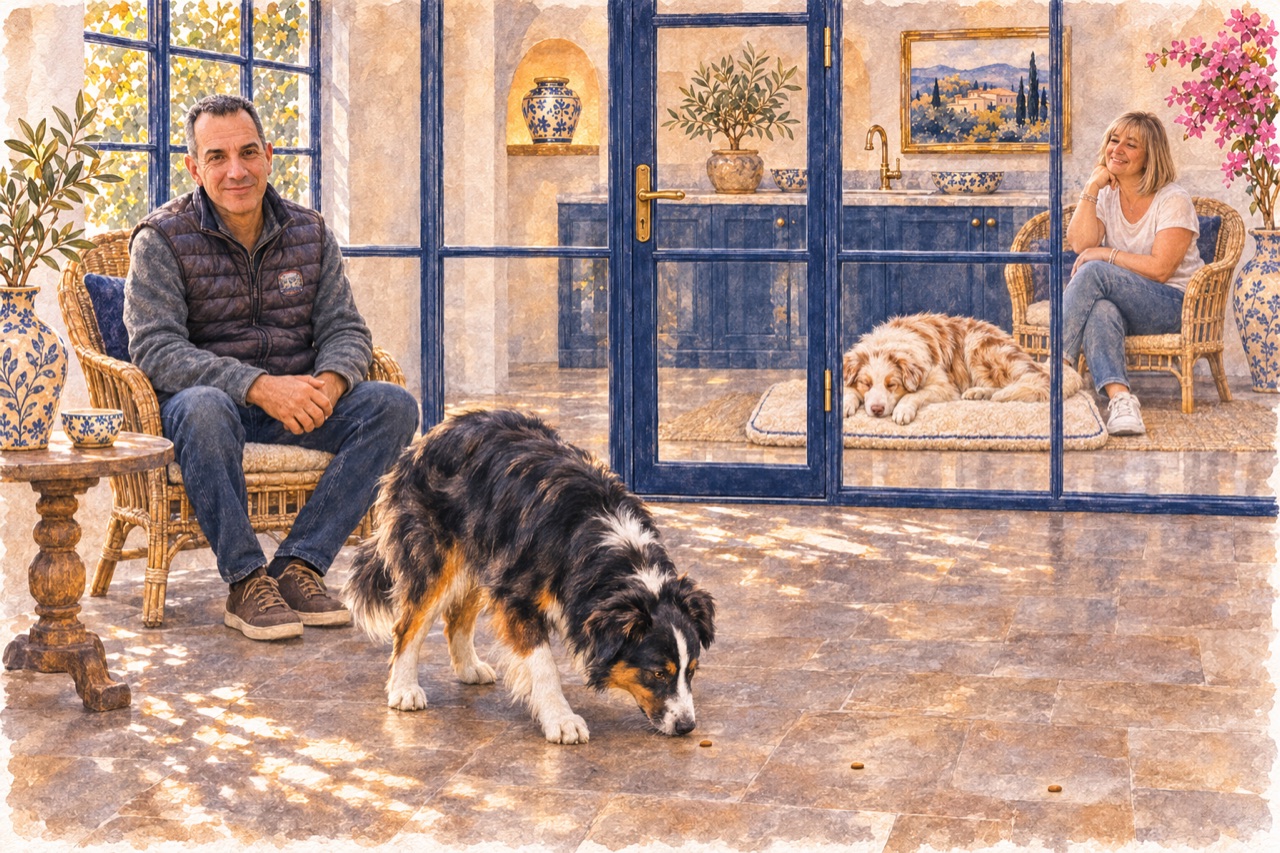
An invitation to use their nose[1][3]
Searching can offer exploration and shared time without sporting targets. Your Aussie does not need to outperform another family’s dog. Interest, life stage and health matter; other dogs can enjoy these games too.
Choose the corner carefully[2][3]
Find a clean, non-slip surface with few distractions. Check for cables, cleaning chemicals and small pieces. Keep targets reachable without climbing or spaces where your dog could get stuck. Stay present throughout.
Keep a small food budget[1][2][3]
Take any food used from the daily allowance and choose something compatible with their diet. Ask about adjustments for allergies or medical restrictions. Do not use hunger to increase enthusiasm; a suitable toy may be an alternative.
Change one detail, preserve confidence[2][4]
Begin with something nearby and visible. Later try a little more distance or partial concealment, keeping access easy. Added fragrances are unnecessary. If the target is missed, make discovery easier instead of insisting verbally or preventing withdrawal.
Three ways to open the game[1][2][3]
An obvious first find
Space a few pieces of the normal diet visibly on a clean floor. Watch the approach without guiding the nose by hand or giving constant instructions.
Choose between two open spaces
Put out two low, wide, stable containers in good condition. A visible piece in one is enough: no covering or toppling needed. Omit containers if your dog chews them.
Recognise a familiar toy
Let your dog watch you place their toy partly in view beside firm, accessible furniture. Support discovery without chasing or pulling the toy away afterwards.
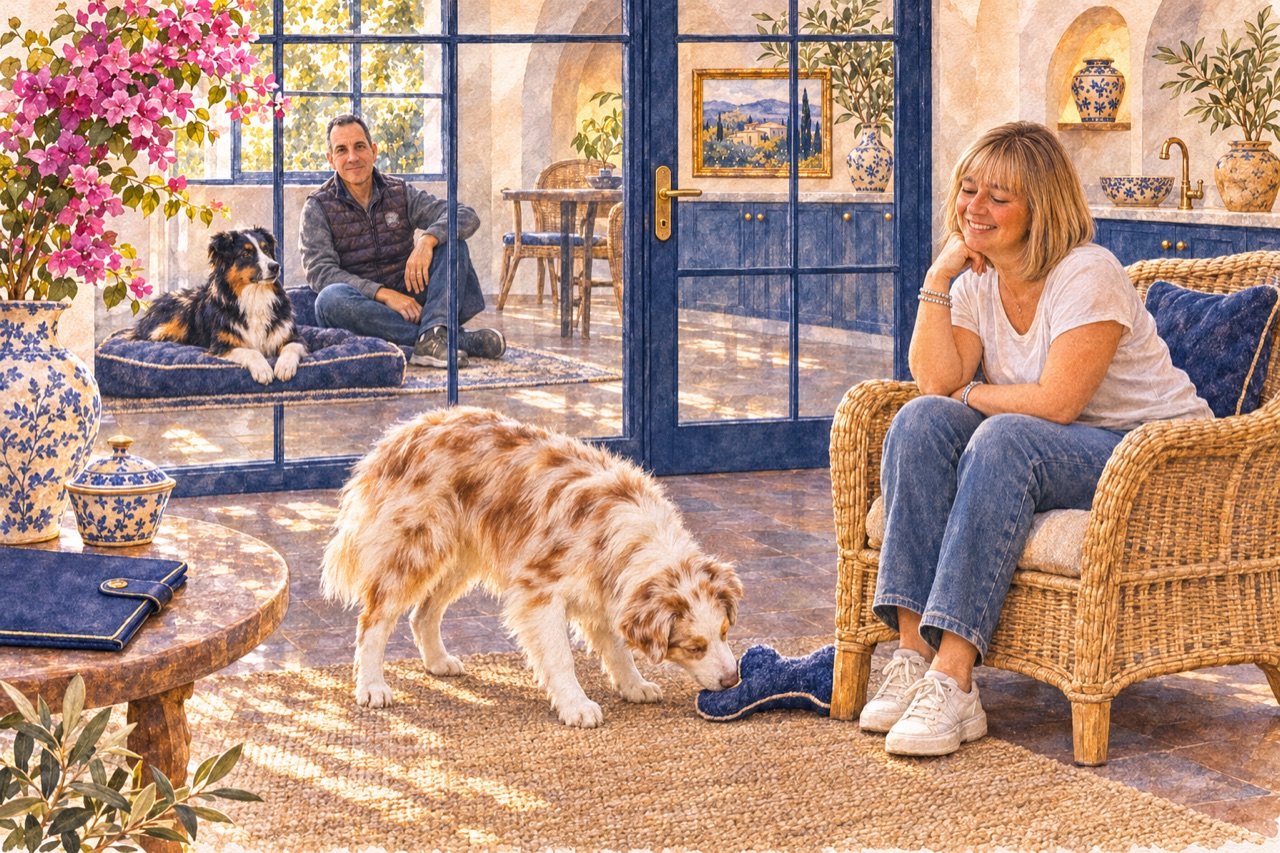
Simple equipment still needs checking[1][3][4]
Choose stable objects, big enough to avoid swallowing, without detachable pieces or sharp edges. If your dog tries eating the equipment, return to an uncluttered floor. Fabric, cardboard and mats need close observation. Do not add perfumes or essential oils.
Sky and Dylan, each with a turn[3][6]
The pictures are educational, not an assessment of their skills. Each dog may prefer a different target or pace. Use separate spaces and check for leftovers before switching, while both dogs are safely elsewhere.
Exploring during walks too[1][3]
Allow time to smell safe places without adding food. For an outdoor game, check rubbish, plants and chemical treatments. Enclosure or lead use depends on the place and applicable rules. Avoid distributing food in public areas shared by other animals.
Protect space around the resource[6][7]
Arrange separate searches and keep children from retrieving finds. With tension, stiffness, growling or guarding, create distance and stop; do not test the dog by taking the object. Ask for veterinary assessment and professional behaviour advice.
Before starting
Frequently asked questions[1][2][3][4][6][7]
What if my dog is not interested?
Allow opting out. Review the setting, comfort and target, then offer another time or activity if wanted. Do not withhold food to increase persistence.
Will this entertain my dog while I go out?
These first activities need your presence and supervision, particularly with new objects. They do not resolve distress about being alone.
When should we move to the next level?
There are no compulsory levels. An enjoyable easy search can be repeated. Change one thing when comfortable and step back if help is needed.