
MAKING ROOM IN THE FAMILY
Two dogs,
two ways to feel at home
Living with two dogs means getting to know each one and allowing their relationship to develop. At Lunamar, Sky and Dylan illustrate this guide to first meetings, shared moments and the time each dog needs with you.
See the first steps
From a first meeting to a calmer home[1][2][3]
Prepare two spaces
Set up a resting place for each, several water points and rooms for separate meals. Initially put away items that could create competition.
Let the setting help
Look for space and quiet, preferably away from familiar territory where feasible. Discuss the location with your vet in light of the puppy’s health, vaccination and local infection risk.
Support without forcing closeness
Have one person accompany each dog. Start at a distance with slack leads and let them explore. Only if both are comfortable, allow a short greeting before offering space again.
Balance company with breaks
At home, supervise meetings and pause before either becomes overwhelmed. When you cannot watch, use safe separate areas. Barriers also need supervision and appropriate installation.
Two dogs: twice the work?[2][3][4][5]
There is more responsibility, but not everything grows at the same rate. You may share some activities while still meeting two different sets of needs and helping them settle together. We do not promise that they will entertain themselves or give a universal number of hours: it depends on both dogs and your organisation.
| Together, when they are ready | Individually, when needed |
|---|---|
| Calm company and compatible activities. | Uninterrupted rest and personal attention. |
| Walks that suit both dogs. | Learning and outings tailored to age and health. |
| Family planning of routines. | Food, veterinary care and expenses for each dog. |
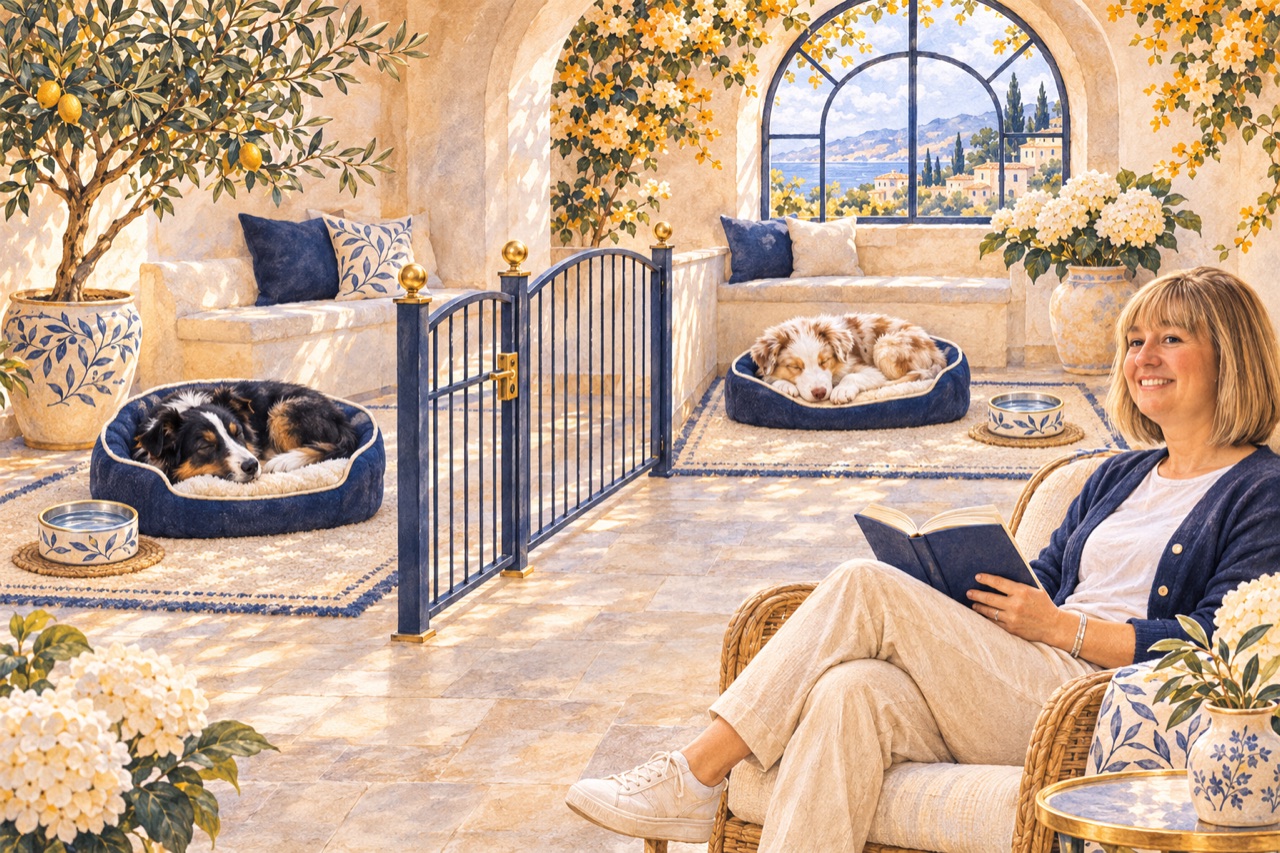
Close does not mean together all day[1][3]
Being able to retreat supports a good relationship. Use different rooms for meals, collect bowls afterwards and spread water points around the home. Offer chews and long-lasting rewards separately. Neither dog should have to guard their bed to get some rest.
A separate bond with you for each dog[3][6]
Make one-to-one time for each: an appropriate walk, a small exercise or quiet company. The puppy learns with you and your resident dog keeps their own moments. Another dog is not a guaranteed solution for distress when left alone; that needs its own support.
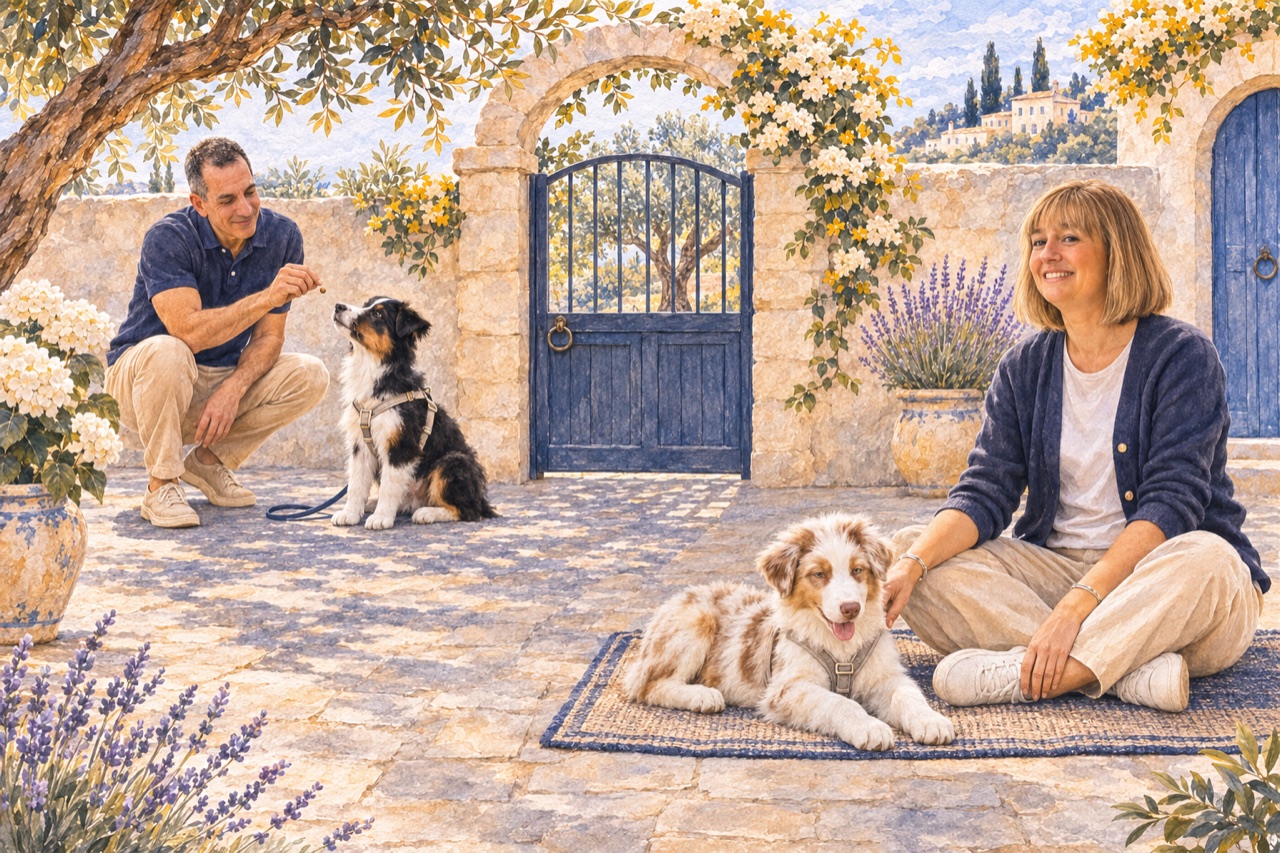
A relationship that can move forward[1][7]
Both move freely, can leave and pause during play. Watch their whole bodies and both dogs, not just a wagging tail.
A meeting that needs more space[1][7]
Looking away, avoiding, stiffening or being unable to rest are reasons to reduce intensity. If one follows without respecting the other’s retreat, help them take a break apart.
Two puppies are different from an adult and a puppy[4][6]
With two young dogs, two learning journeys happen together. Plan experiences, education and time with you individually, alongside pleasant shared moments. Practise distance and gradual separations at a level each can cope with; do not leave them crying to get used to it. Relatedness alone cannot predict their relationship.
Your family preparation list
Frequently asked questions
Must they play together to get along?
No. Calmly sharing an environment and choosing to move away are already valuable. Do not force play, greetings or a shared bed.
Will a second dog keep the first happy when we go out?
There may be company, but it does not guarantee comfort in your absence or resolve separation problems. Build that skill with each dog.
When can I leave them unsupervised?
There is no set day. Use separate spaces initially when you cannot watch; later assess both dogs’ actual safety and comfort.