
CARING FOR A LIFELONG BOND
Needs change.
The bond continues.
At Lunamar, we see care as something that evolves throughout life. Fictional scenes inspired by David, Cristina, Sky and Dylan help imagine adapted walks and homes; they do not describe their current age or health. Each dog deserves an individual pace.
Support this life stage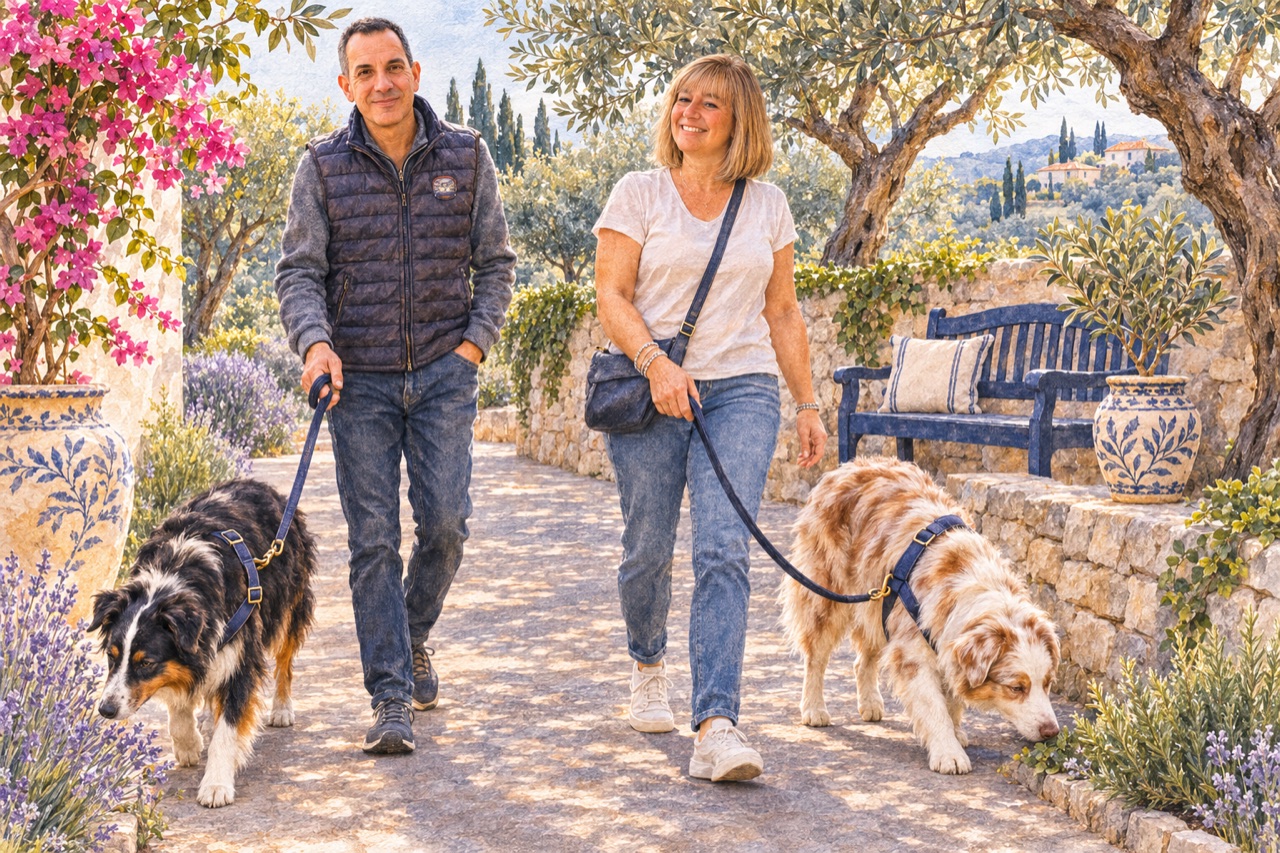
Recognise stages without one shared date[1][3]
Maturity and old age are different. Aussies do not all age alike or enter senior years on the same birthday. Size, history and health guide assessment. Look at the dog in front of you and prepare changes with your vet rather than assuming difficulty is inevitable.
Listen to changing movement[1][2][3]
Effort getting up, avoiding jumps or stairs, irritability and reduced interest in outings can signal pain or other problems. Do not insist or read this as unwillingness. Describe the circumstances and, without causing discomfort, save a video of ordinary movement for consultation.
Plan individual reviews[1][3]
Arrange examinations and tests for history and progress. Include mouth, senses, skin and new lumps; report changes in appetite, drinking, urination or sleep. Prevention still depends on local risks rather than stopping or repeating vaccines and parasite treatments solely because of age.
Change the walk without removing opportunities[1][2]
Find a comfortable pace, suitable ground and pauses, adjusting effort and duration with clinical advice. Keeping up with a young dog does not require runs or jumps. Tiredness, limping or worse comfort later need review. Swimming and rehabilitation require suitability and safety assessment, not automatic use.
Support through three decisions[1][2][3]
Know their starting point
Record enjoyment, movement, eating, sleeping and toileting. Compare with normal routine without putting the dog through effort tests.
Make daily life more accessible
Try an easier walk or better floor grip while preserving contact and choice. Offer manageable games and protected rest.
Share observations
Bring notes and unforced videos to the vet. Agree goals, monitoring signs and next steps if pain or illness develops.
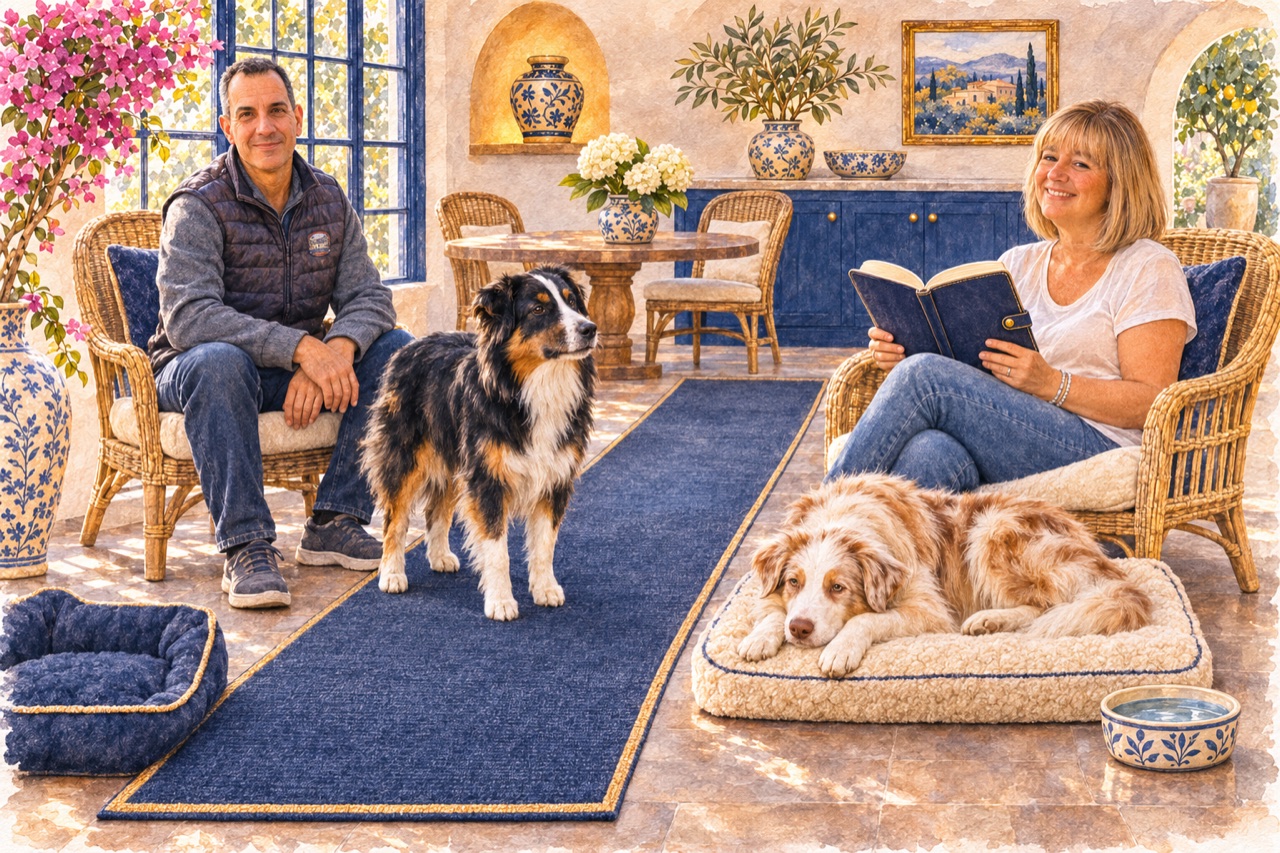
Remove everyday obstacles[1][3][4]
A firmly secured non-slip route, accessible bed and water within reach can help. Avoid jumps and unsafe access; any assistance for climbing must be stable and appropriate. Protect naps and toilet opportunities. With sensory changes, preserve predictable routes and signals that can be perceived without surprise.
Look beyond the scales[1][6]
Fat and muscle need different assessments. Discuss food, portions and treats for health and progress; not every older dog needs less food or a “senior” formula. Do not reduce protein merely for age. Supplements and therapeutic food are individual decisions, not additions to try yourself.
Sky and Dylan: adapt separately[2][3]
These illustrations discuss different needs without assigning diseases. For dogs of different ages, arrange individual rest and activity without requiring the older one to follow the younger. A new puppy is not a treatment for ageing.
Confusion needs clinical context[1][4]
Getting lost at home, night wandering, changed social contact or toileting accidents can reflect pain, sensory or other disease as well as cognitive problems. Seek assessment before labelling dementia. Do not punish. Keep routines and achievable learning without expecting enrichment alone to prevent or cure these conditions.
Know when to act[1][4][5]
New or lasting changes deserve advice even in an older dog. Trouble breathing, collapse or sudden inability to use the legs require immediate emergency veterinary contact. Prepare the local number. Do not improvise human pain medicines or change prescribed treatment.
A home that supports them
Frequently asked questions[1][2][3][6]
Does a birthday mark old age?
There is no single one for the breed. Health and individual progress guide assessment; one grey hair does not define care needs.
Is no exercise better?
Age alone does not mean complete rest. Offer movement that is comfortable and enjoyable, reviewing limitations, pain or fatigue with your vet.
Should all the food change now?
Review body condition, muscle, health and current diet first. A commercial name or age alone cannot determine portions, supplements or therapeutic food.