
A HOME THAT BUILDS TRUST
By their side.
At their pace.
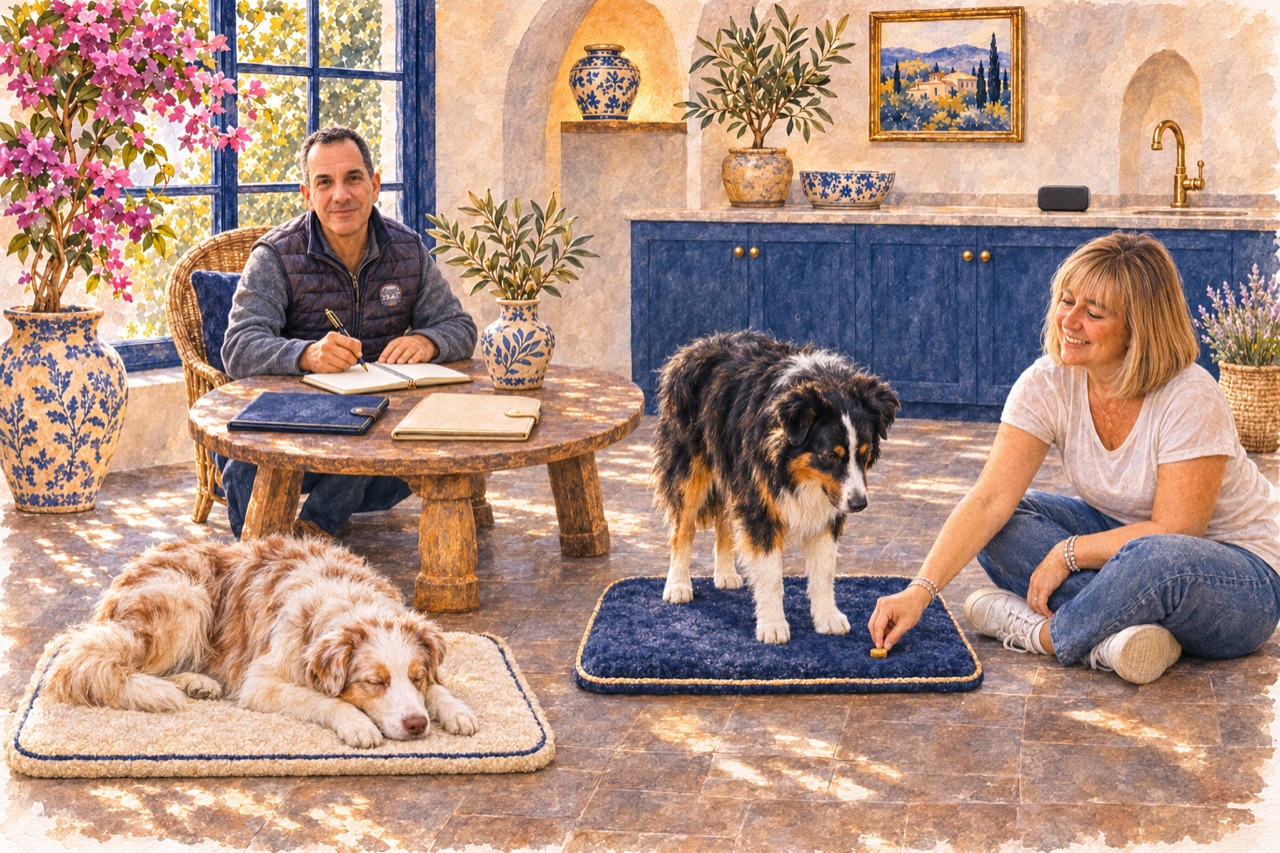
At Lunamar, we want families to know how to help when their dog needs safety. The scenes inspired by Sky and Dylan show a home offering choices: staying close, resting apart and learning without pressure once calm returns.
Prepare a plan
Notice the earliest changes[1][2]
Fear does not look the same in every dog. They may shake, hide, freeze, pant without heat or look for an escape. Read posture together with context, rather than labelling one gesture. Knowing the trigger and recovery pattern helps guide the next step.
Create a corner before it is needed[1][3]
Choose a welcoming indoor space with familiar bedding, water and freedom to enter and leave. Introduce it during pleasant moments. Do not try new confinement in a storm or drag the dog from a safe hiding place; the space should remain trustworthy.
Offer support during a scare[1][2]
Stay inside, draw curtains to reduce flashes, close windows and check exits to prevent escape. A gentle sound background can be used if your dog likes it. Be available for requested contact and give space when they withdraw. Punishment, forced hugs or showing them lightning adds difficulty.
Build small, pleasant associations[3][4]
With professional guidance, a sound can be introduced so quietly that the dog stays comfortable and paired with enjoyable food or play. It need not get louder every session. Stop if posture changes, the dog tries to leave or refuses normally valued food. Continuing to eat does not rule out stress.
A simple plan everyone can follow[1][2][3]
Ahead of time
Check weather alerts and local noisy events, review identification and save veterinary contacts. Move the walk earlier if conditions allow a safe return before the noise.
In the moment
Offer access to the familiar retreat and your presence without demands. Food or play is optional if enjoyed, never a lure towards the noise.
Once it has passed
Allow calm recovery and note the trigger, response and recovery time for your consultation. Do not recreate a frightening situation to obtain footage.
Separate practice from real events[3][4]
A recording captures only part of the experience: storms combine sound, light and other changes. An illustration of Sky or Dylan untroubled by a speaker cannot predict any dog’s response. Never use panic as a training opportunity or force them to endure until they give up.
Know the dog as well as the breed[1][3]
Being an Australian Shepherd is neither a diagnosis nor a destiny. Match experiences to the dog’s signals and provide a way to move away. Puppies can discover new things positively and gradually; once fear appears, the aim is an appropriate support plan rather than accumulating exposures.
Sky and Dylan: two spaces, two responses
The illustrations suggest a practical choice for two-dog homes: provide alternatives. Each dog may prefer a different distance or retreat. Do not rely on one to calm the other or bring them together by force; monitoring and treatment belong to each individual.
Work as a team with your vet[3][5]
New or increasing fear, or fear affecting sleep, eating or outings, deserves early consultation, including checks for pain and other health problems. Qualified behaviour support and medication prescribed for this dog may be needed. Never use human drugs or borrowed prescriptions. Injuries, breathing difficulty or collapse need emergency care; immediate danger of self-injury also calls for urgent veterinary help.
Our checklist
Frequently asked questions[1][2][3][4]
Should we ignore them to avoid increasing fear?
No. You can respond calmly when they approach for support. They do not need compulsory stroking either: being available includes letting them rest apart.
Should we take them to a noisy celebration to get used to it?
That is not a safe treatment for fear. Intense exposure without escape can worsen it. Work at controlled intensity with welfare in mind, away from the real event.
Will a recording solve storm fear?
It may be part of a programme, but it cannot reproduce the whole experience or guarantee results. Pause and review with your professional if progress stalls or distress increases.