
Learning to live together through play
More shared play.
Fewer teeth on skin.
Life with a Lunamar puppy includes guiding that urge to use their mouth. Preparing the surroundings and responding calmly and clearly can help make play comfortable for everyone.
Getting started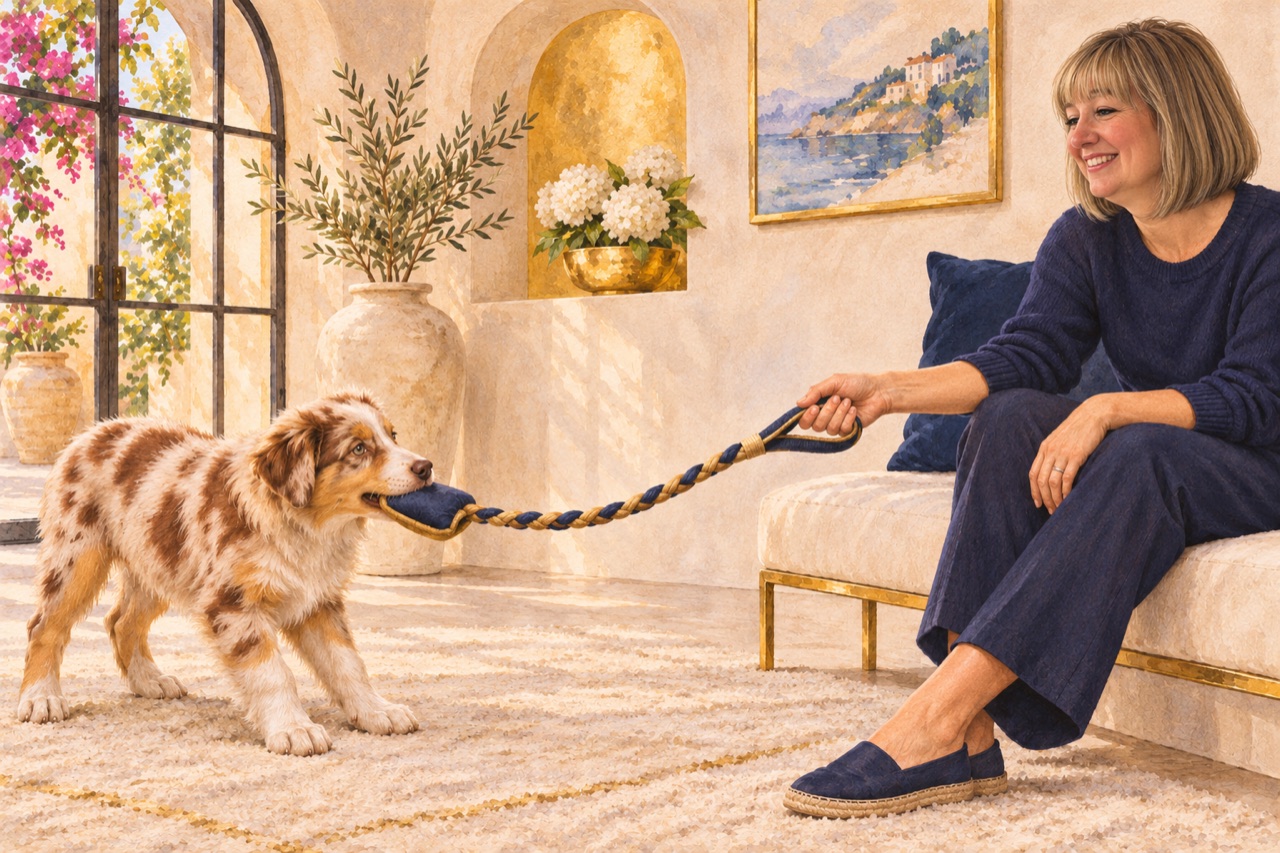
A simple, consistent response[1][2][6]
Slow a game that is speeding up
Stop waving hands or clothing and avoid sudden pulling. Speak calmly. This is not an endurance test: if someone could get hurt, create distance safely.
Give the mouth another outlet
Offer an appropriate toy during a pause, with space between teeth and fingers. Anticipating repeated situations is often easier than intervening when your puppy already holds a trouser leg.
Make the alternative clear
Notice gentle approaches and toy choices. Quiet play, kind words or an appropriate reward can show which interactions work. Agree on the same approach throughout the household.
Reorganise if they cannot stop
End the interaction briefly and separate spaces safely if needed. Use barriers only when comfortable; do not move the puppy by force or isolate as punishment. Respond to distress and rethink the next game.
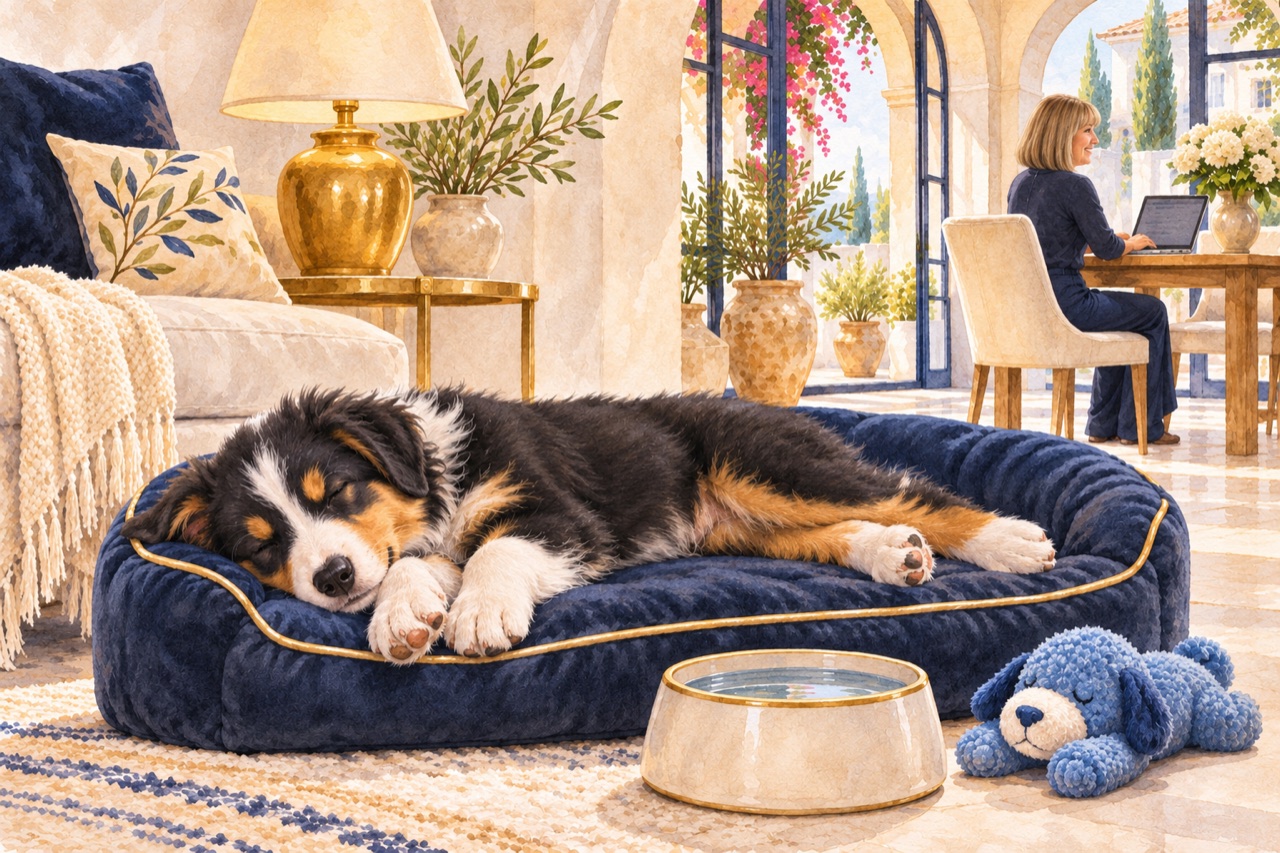
A daily rhythm with room for rest[1][2][5]
Review the whole day, not just the moment of biting. Visitors, racing around and prolonged play may make settling harder. Provide suitable activity and exploration alongside undisturbed rest. A tired puppy does not always need another round of play.
Choose chewing options suited to their size and chewing style. Supervise, check condition and remove items shedding pieces. Extremely hard materials, including bones and antlers, may fracture teeth. Ask your vet about appropriate choices.
Planning life with younger family members[2][3]
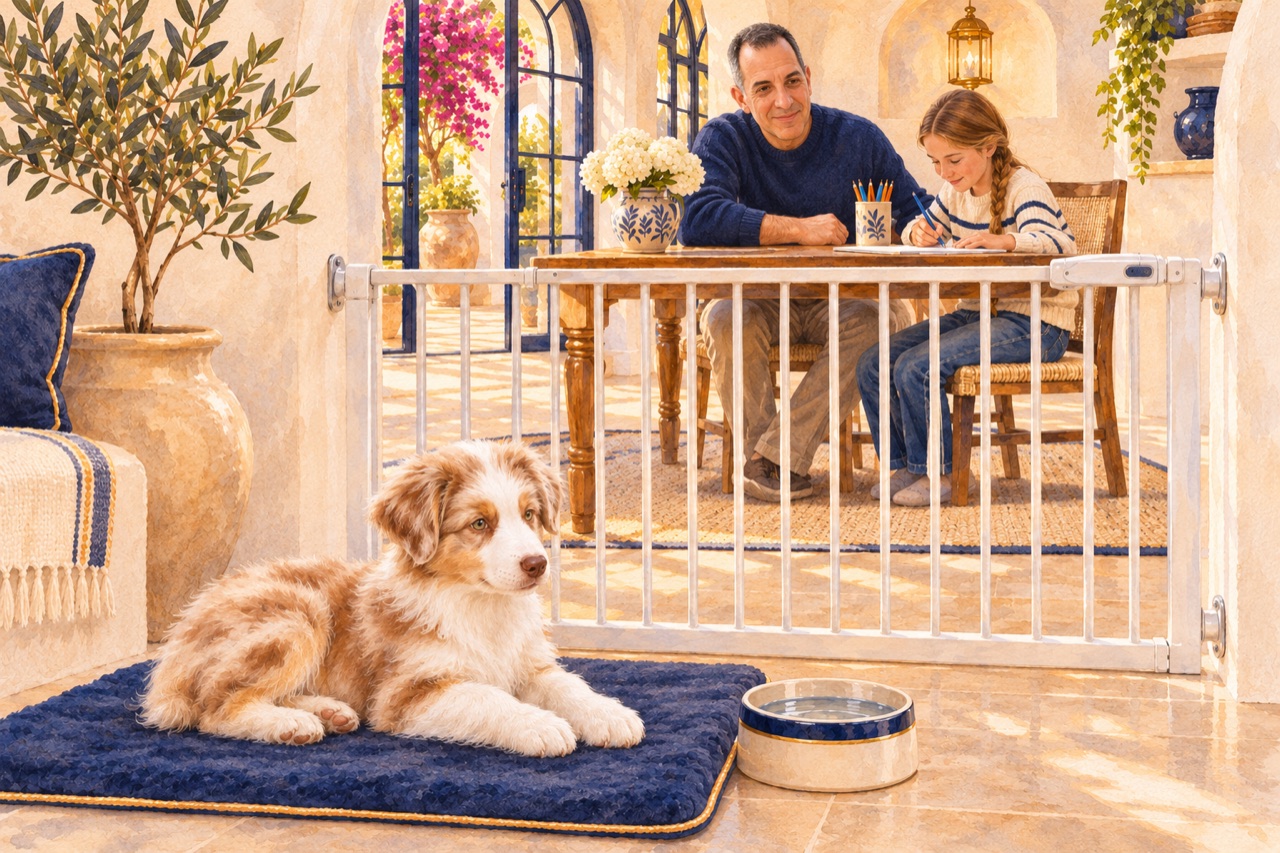
Active supervision belongs to an adult. Plan short interactions without chasing, wrestling or hand games, and respect the puppy’s choice to move away. If biting begins, the adult ends the interaction and arranges a safe break. When you cannot pay close attention, use separate spaces and meet both children’s and puppy’s needs.
Teach before things get difficult
Use easy moments to practise gentle toy play and reward calm choices. Break brushing and harness fitting into brief contacts; do not persist if your puppy moves away or stiffens.
Keep it out of confrontation
Copying a yelp may make play more exciting; shouting, hitting, closing the muzzle or pinning down risks fear or frustration. Growling means the situation needs reviewing: give space rather than punish it.
Track progress without calendar promises[1][2][3]
Development is individual. Record the timing, what happened beforehand and what helped your puppy settle. Aim for interactions that become easier and safer, rather than simply waiting for adult teeth. Do not read every nip as dominance or something inevitable in an Australian Shepherd.
Your agreement for better play
Common questions
What about yelping to stop the biting?
We do not suggest it as an automatic response: it may increase excitement. A calm pause and a clear alternative can offer a more manageable starting point.
Does mouthing mean our puppy will be aggressive?
Play mouthing is common and does not alone predict that outcome. Pain, fear or increasing intensity still deserve assessment; avoid labelling without understanding the situation.
When should it have stopped?
There is no date that fits every puppy. Watch progress and its effect on daily life. Ask for an individual plan if it hurts, worsens or cannot be managed safely.