
Making room for your next chapter
Before you meet,
plan for their wellbeing.
The welcome begins when you think about daily life together. At Lunamar, we suggest preparing three things: surroundings you can supervise, routines your household shares and the essentials for care from day one.
Use this guide to make decisions together before your puppy arrives. Ask Lunamar about familiar habits and handover questions so you can build on what your puppy already knows.
Check our preparations ↓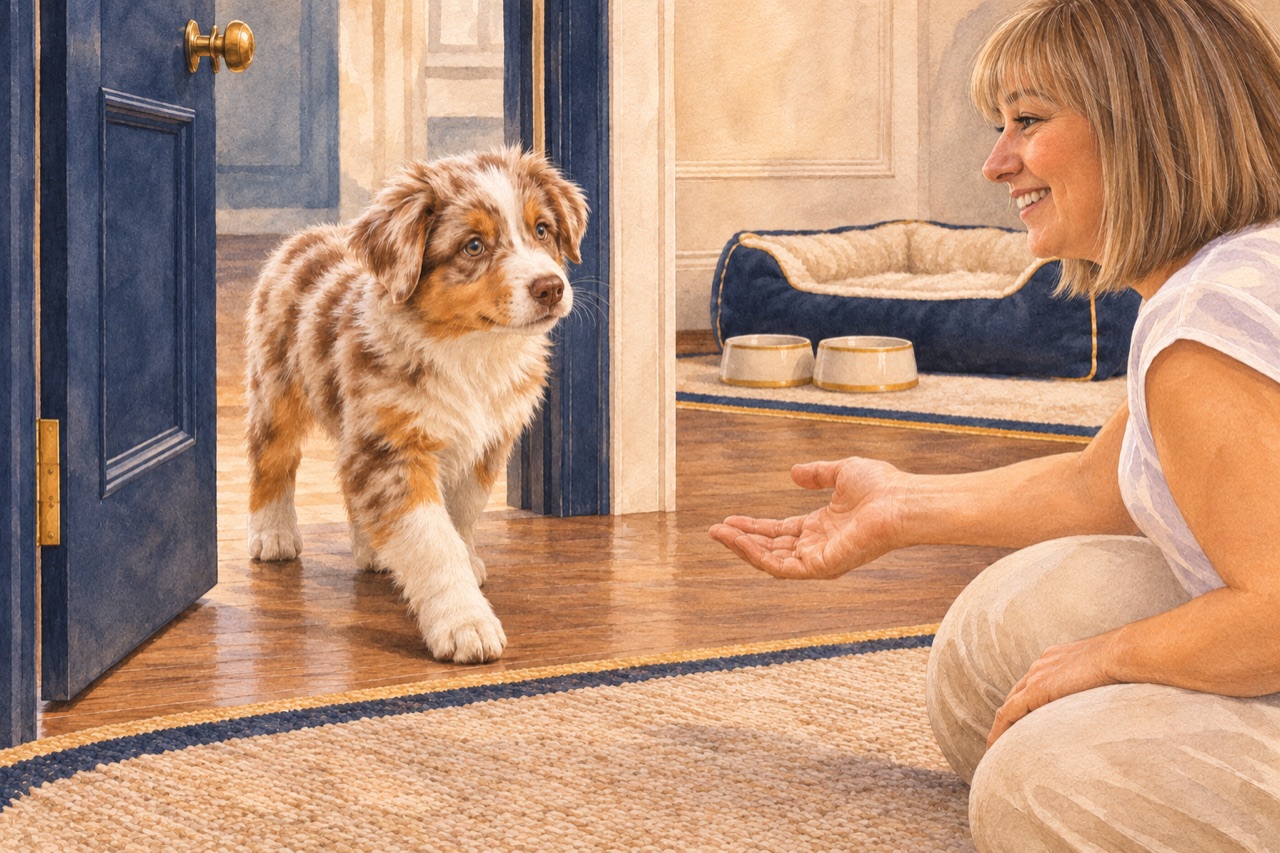

Choose what you will actually use.
Start with a few items that fit your puppy now, rather than the adult dog they will become. Recheck sizes and fit as they grow. Watch toys during use and remove damaged ones; no toy is indestructible.
- Somewhere to sleep
- Choose a quiet spot away from draughts, with an easily washed bed and a blanket.
- Their first bowls
- Have stable, washable bowls ready. Ask for the exact food, approximate portions and familiar mealtimes; keep that diet initially and seek advice before changing it.
- Outings and transport
- Prepare a lead and well-fitting collar or harness, plus a transport system suitable for their size. Check the requirements for your particular journey.
- Exploration and hygiene
- A few sturdy toys too large to swallow, an appropriate brush and waste bags are enough to start. Keep cleaning products and equipment safely out of reach.
Create surroundings you can supervise.
Before opening up the whole home, walk through the area your puppy will meet first. Chewing and mouthing are part of exploring; planning ahead makes calm supervision easier.
- Protect cables, small components and children’s toys, and move anything your puppy could break, chew or swallow.
- Keep medicines, cleaners and unsafe foods behind closed doors. Identify your plants and check that they are safe for dogs.
- Check doors and fences for gaps. Prevent unsupervised access to stairs, balconies, swimming pools and ponds.
- Distinguish puppy toys from children’s toys. Give resident animals their own areas where they can remain undisturbed.
Prepare their retreat as well.
Put the bed somewhere comfortable and accessible, where your puppy can withdraw without being in the middle of household traffic. Agree to protect naps; children need to understand that waking the puppy for a game interrupts essential rest.
A pen or carrier can be introduced gradually as a pleasant space, provided it is large enough. It does not replace company, movement or toilet opportunities, and must never be used for punishment.

Plan who will be there and share the care.
A prepared home also needs prepared people. Talk through responsibilities and a few simple expectations that everyone can follow patiently.
- Allocate tasks so feeding, cleaning, outings and veterinary care each have someone responsible.
- Arrange company during the early days. Do not plan for a puppy to go straight from familiar surroundings to a whole day alone.
- Keep the welcome low on new experiences and consistent across the household, without a stream of visitors or compulsory greetings.
- Plan introductions to resident animals with separate spaces. Encounters between children and dogs always need supervision.
Have useful information ready.
Choose your vet before arrival and save both the practice and emergency numbers. Set aside a folder for the feeding, health and care information you will receive, and write down questions to discuss at handover.
A welcome planned together
Tick the boxes to see what is still to arrange. Selections last while this page remains open; you can also print the guide.
Decisions you can settle beforehand
Should we equip the whole house in one go?
Start with the basics. Your puppy’s current size and preferences will help you choose the rest later; ask before buying accessories whose fit or usefulness is uncertain.
What do we need to plan those first meals?
Write down the food name, approximate portions and usual schedule. Initial continuity avoids improvised changes; seek advice about a transition if you want to alter the diet.
When should we plan their first experiences beyond the home?
You can plan before arrival with your vet’s guidance, taking account of health, vaccination and local risk. Choose pleasant, controlled experiences with an option to withdraw; socialisation does not mean forced encounters or careless exposure.