
EVERYDAY SAFETY
Build shared trust.
Respect personal space.
At Lunamar, we want meals, play and rest to feel predictable and safe. Scenes inspired by David, Cristina, Sky and Dylan show organisation and voluntary learning. Confronting a dog worried about losing something important does not build trust: understand the situation and reduce risk.
Prepare prevention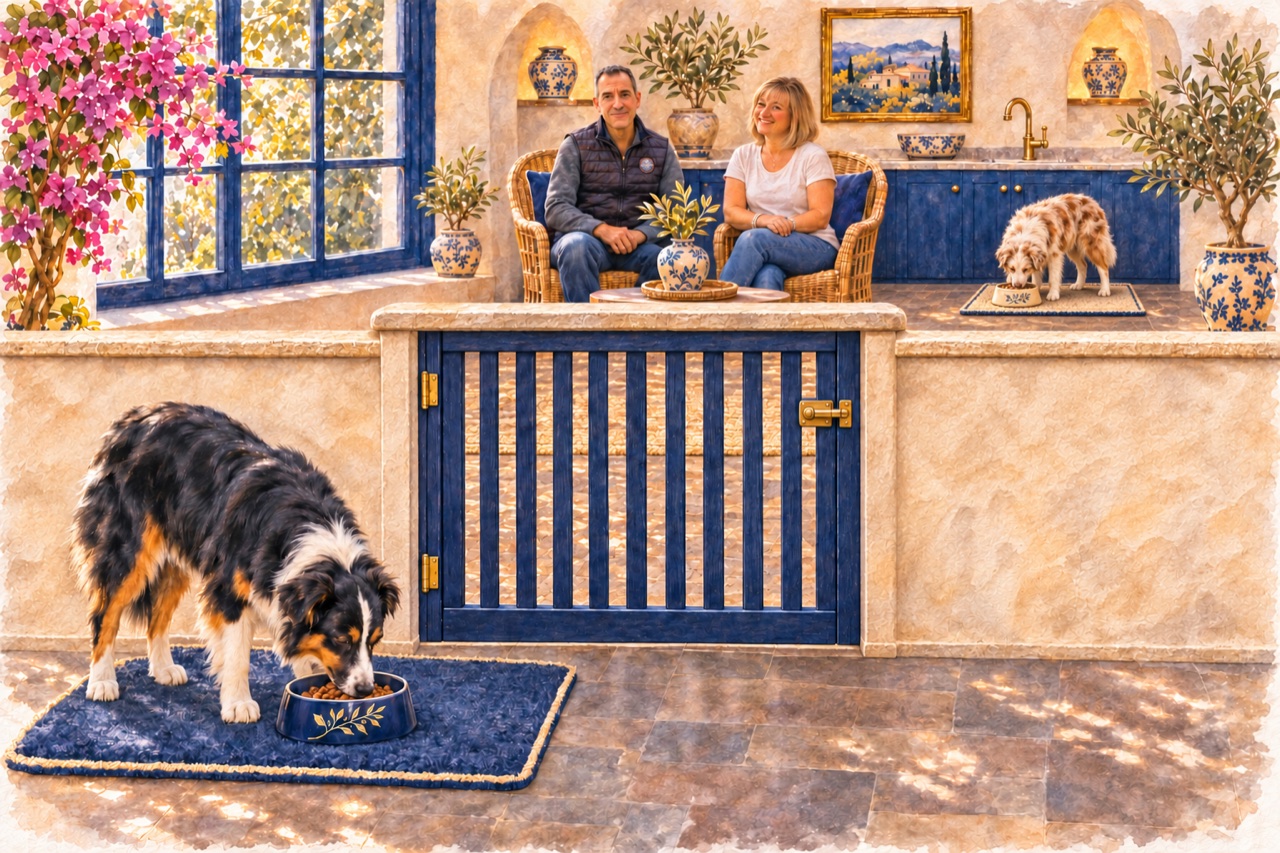
Value belongs to the individual[1][2]
A meal, toy, found object, resting spot or access to someone can matter. The same dog may respond differently depending on resource and setting. Carrying an item away does not by itself prove guarding; watch responses to people or animals approaching.
Listen to requests for distance[1][2][5]
Rigidity, stillness, covering with the body, sideways watching, eating faster as we approach, retreating with an item or growling can indicate discomfort. Read the whole picture without diagnosing from one gesture. Stop approaching and allow safe space without punishment or testing the warning.
A meal that needs no defending[1][2]
Set down food with the dog away from your hands in a quiet area with protected access. Do not touch while eating, put hands in the bowl or remove it to teach a lesson. Collect later with the dog safely elsewhere. Hand-feeding, hunger or lengthy obedience sequences are not required to prevent guarding.
Prevention begins with surroundings[1][4][5]
Keep unsuitable objects inaccessible and offer undisturbed rest. If a sofa or bed is guarded, do not pull the collar: avoid confrontation and seek help planning alternatives. Children never retrieve possessions or intrude on food, sleep or chews. An adult directly supervises, otherwise use a secure barrier.
Three decisions before swapping[1][2][3]
Choose prevention over risk exposure
A responsible adult, comfortable dog with no guarding history and safe low-value toy. If those conditions are absent, arrange spaces and seek advice.
Offer an acceptable option
Present an appealing alternative with room to move. Wait for voluntary release and departure. No tugging, chasing or repeated pressure.
End without dispute
Retrieve when safely separated and return an appropriate toy. Keep it brief and stop immediately at tension or growling; seek support next.
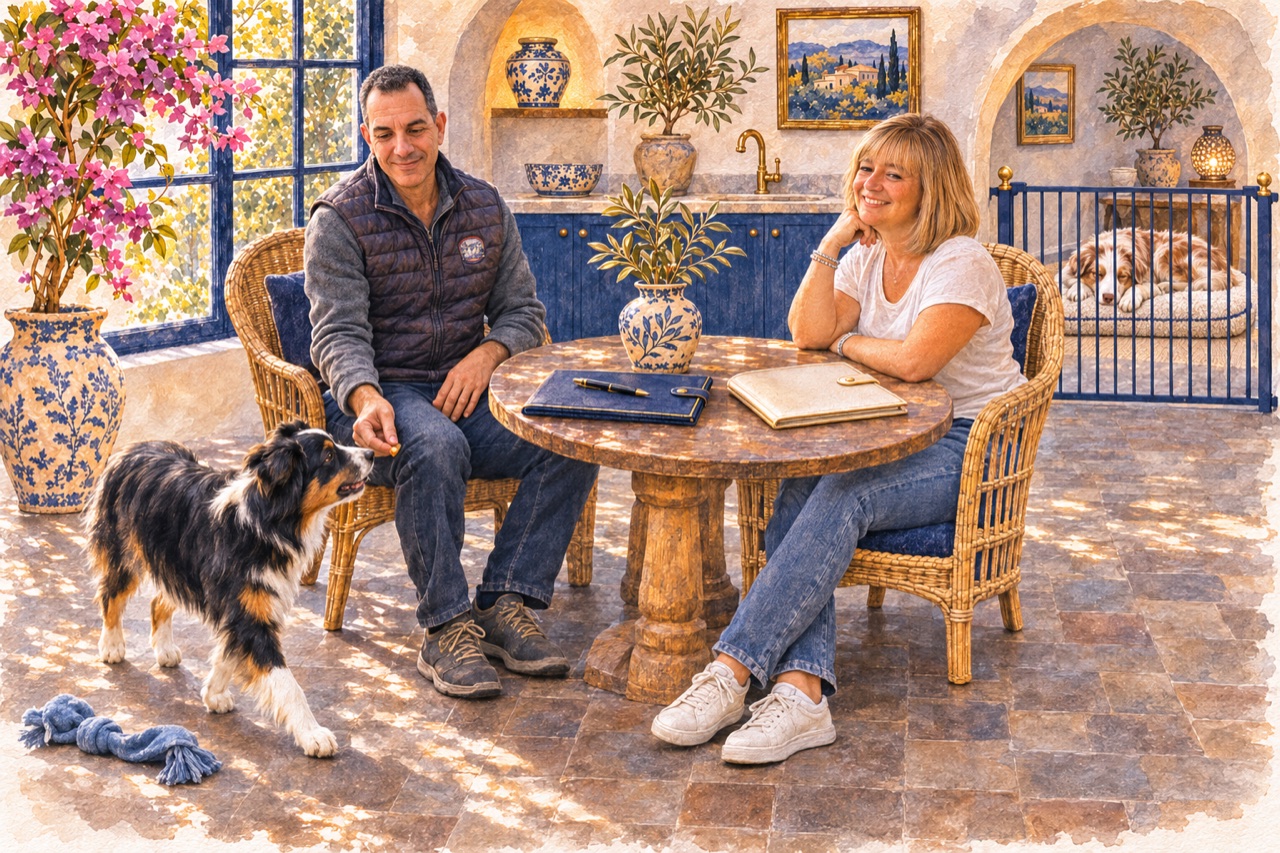
A swap starts with choice[1][3]
With a relaxed dog without signs or history of guarding, teach using a safe unimportant toy. Offer something preferred and room to release and leave it behind, without pulling or reaching near the mouth. Retrieve only with real safe separation; returning an appropriate toy means the exchange need not always predict loss. Do not press on if hesitation, freezing or refusal appears.
Two animals need not share everything[1][2][4]
Arrange physically separate meals and clear leftovers before reuniting pets. Nearby bowls are not separation. Provide resting areas and supervise toys; avoid a shared chew that leads to conflict. Do not let pets dispute who is in charge or intervene with hands between fighting animals.
Sky and Dylan: individual resources and pace
The illustrations include both without attributing a behaviour problem. Each needs their own space and observation. Calm turns avoid competition; an easy exchange for one does not justify asking the same of the other.
A dangerous item changes priorities[1][3][6][7]
Chasing, cornering or forcing the mouth open can lead to bites or swallowing. Move children and other pets away. Suspected toxins or swallowed objects that could obstruct need immediate veterinary or emergency contact, without waiting for symptoms. Do not induce vomiting or improvise extraction. Safety and clinical assessment precede any training exercise.
Seek support before repeating incidents[1][2][5]
Guarding, repeated growling, threats, bites or changed behaviour need veterinary assessment and an individual reward-based behaviour plan. Health, pain and hunger changes may contribute. Avoid risky approaches and arrange comfortable separation in the meantime. Being a puppy or Australian, or completing a set number of practices, cannot guarantee resolution.
Before offering food or toys
Frequently asked questions[1][2][3][5][7]
Must the dog learn to share everything?
Sharing a bowl or surrendering every object is not needed to prove trust. Organise resources and teach safe skills without creating competition.
Does fast eating mean guarding?
Not alone. Context, changes and other signals matter; health or feeding factors may also contribute. Observe without intruding and ask advice if concerned.
What if growling or a snap has happened?
Do not continue the preventive exercise. Stop approaching, create safe distance and seek veterinary and behavioural help. Do not try proving you can take the item.