
WELCOMES THAT PROTECT TRUST
Room for excitement.
Time to learn to greet.
At Lunamar, we want arrivals to feel good for the person entering and the dog waiting. Scenes inspired by David, Cristina, Sky and Dylan accompany learning through space, small rewards and shared choices. A greeting is an option; feeling safe comes first.
Prepare a greeting
Ask what lies behind the jump[1][3][5]
A dog might jump with enthusiasm, to seek attention or because a situation feels worrying or frustrating. Look at movement and the full set of signals. Stiffness, retreating, seeking an exit or growling changes the plan: reduce pressure and allow space instead of requesting another hello.
Build the welcome you want to see[1][2][3]
Find an easy moment with someone familiar and reinforce approaching without leaving the floor. Deliver rewards low rather than lifting a hand that invites reaching up. Comfortable standing counts. Sitting can be offered if already known, without pressing the body down or demanding it when overwhelmed.
Keep the welcome consistent[1][3]
Share the approach with family and guests so jumping does not lead to play one day and scolding another. Have rewards ready and rehearse in small steps. Change proximity, movement or time separately; struggling to attend means the meeting needs simplifying.
Pause without a struggle[1][3][5]
Avoid pushing hands, knees, shouting, holding paws or lead jerks. When safe, stop contact and quietly turn sideways. If insufficient, gain distance or step behind a barrier; nobody needs to risk falling to train. Restart under easier conditions and reward grounded paws. If insecurity is involved, meeting the need for space takes priority.
A small, well-prepared hello[1][2][3][5]
Agree who will take part
Choose a familiar adult, a quiet setting and ready rewards. If using a lead, keep comfortable equipment slack rather than immobilising the dog for strokes.
Approach with room to spare
The helper advances only while the dog stays comfortable. Reward grounded paws before jumping. If tension or excitement rises, move away and make things easier.
Value a brief meeting
A pleasant pause is better than continuing until calm disappears. Another day, change person or place and bring back simpler steps as needed.
The arrival begins before the bell[2][4]
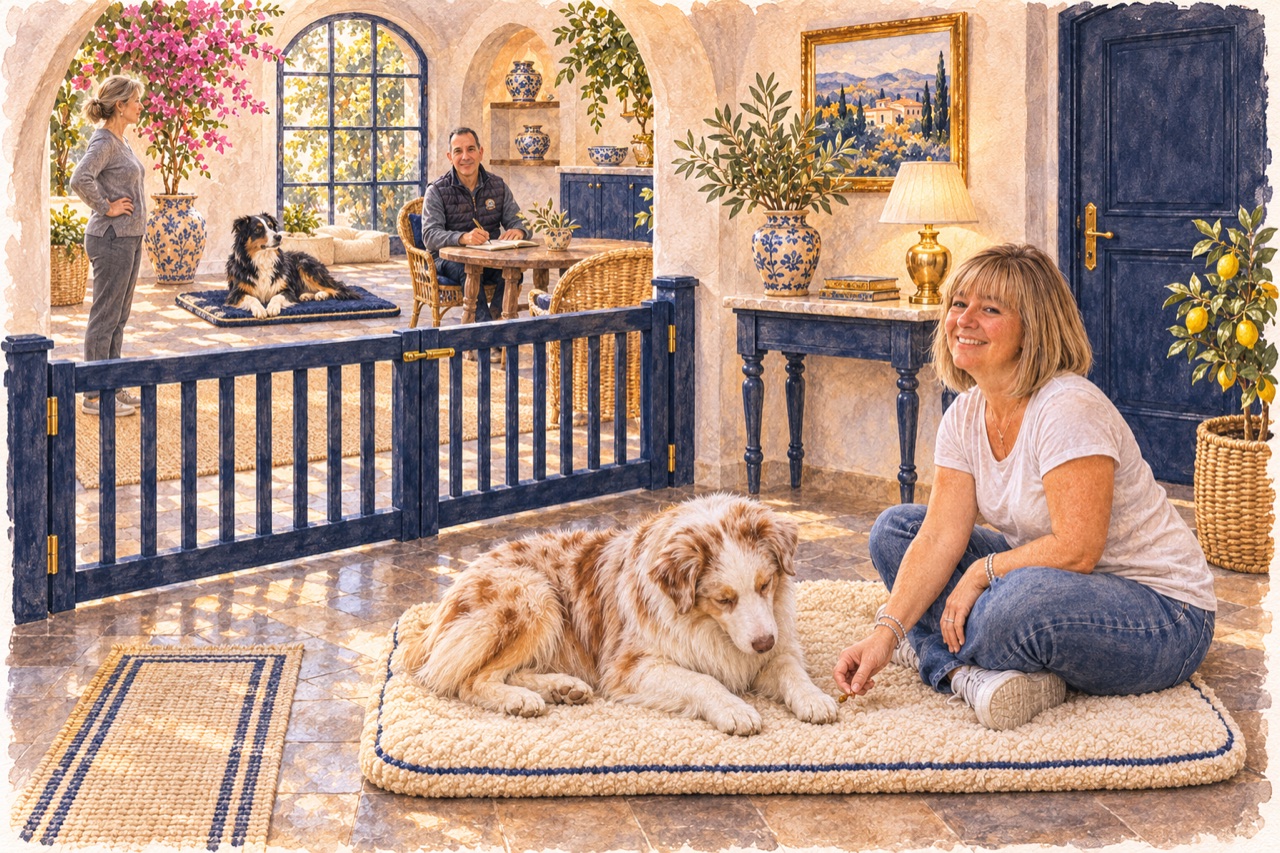
Prepare an already familiar pleasant area and safe separation while guests enter and settle. Teach going to a mat separately, without using it as punishment. Introduce sounds and entry in stages, softly at first; a reaction means reducing intensity and taking an easier step. People remain responsible for gates and doors.
Offer contact rather than require it[1][2][5]
Both visitor and dog may prefer distance. Avoid reaching over the head or leaning over the dog and allow a voluntary approach. If comfortable, offer a brief chest or shoulder stroke then pause to observe; do not follow a withdrawing dog. Away from home, keep a loose lead and space to pass without contact. Skipping a greeting can be a good experience.
Sky and Dylan: each gets a turn
Both appear in the illustrations, but initial practice works best individually. Give the waiting dog a comfortable area and appropriate attention. Avoid shared rewards in a crowd by the door. Working together comes when you can care for both without competition or rushing.
Welcomes with children or vulnerable people[1][6]
Keep training rehearsals for adults who can manage them. With children, an adult directly supervises and ends an uncomfortable interaction; use a secure barrier if supervision is unavailable. Do not lure an uncertain dog towards a child with food. Prevent jumping on older people or anyone with balance difficulties, and respect those who prefer not to approach.
When more support is needed[1][3][5]
Intense jumping, mouthing, growling, fear or injury risk calls for reward-based professional support. Meanwhile, avoid situations beyond your management and arrange comfortable separation. Sudden changes or possible pain need a vet check. Breed does not prescribe one greeting style or a timetable for results.
Before welcoming or approaching
Frequently asked questions[1][2][3][5][6]
Does jumping mean happiness?
It may be enthusiasm, but it can also reflect frustration or uncertainty. Read the whole body and context; tension or attempts to retreat call for space.
What if a guest encourages jumping?
Explain the plan beforehand and skip practice if they cannot cooperate. Welcome them while the dog stays comfortably separated, and train another day with suitable help.
Must everyone stroke the dog?
No. Both dog and person need to be willing. Watching from a comfortable distance or passing without touching can support pleasant coexistence too.