
PREVENTION THAT FITS THEIR LIFE
Care today.
Prepare for what comes next.
At Lunamar, health means ongoing care built by the family and the vet together. Scenes inspired by Sky and Dylan accompany this guide to organising questions and preparing decisions for each individual dog and place.
Prepare your visit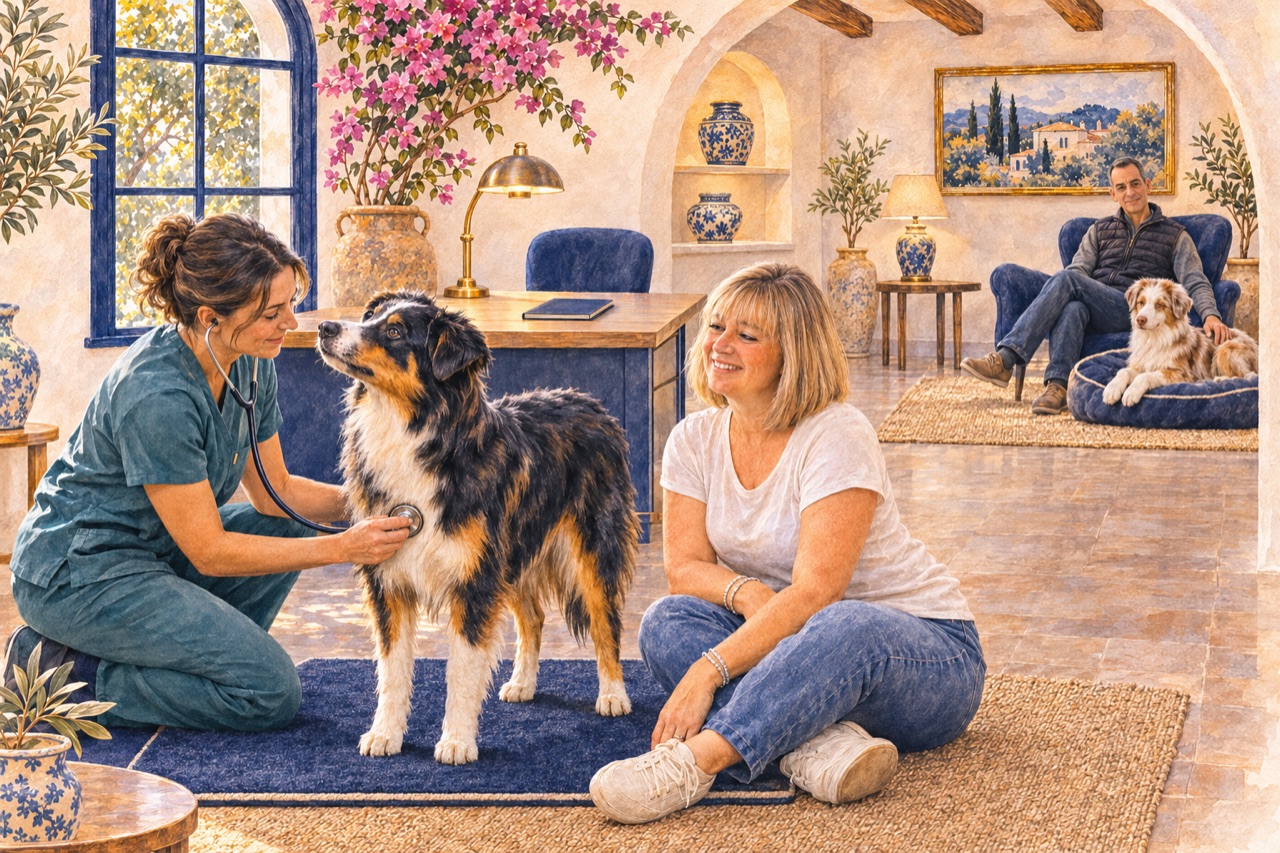
Understand the starting point[3]
Arrange an appointment after arrival with all available information: documents, vaccinations and products with dates, tests, diet and questions. Examination and discussion review development, oral health and wellbeing before agreeing next steps. Preventive visits remain useful when your dog seems well; frequency fits the individual and life stage.
A vaccine conversation, not a copied timetable[1]
Some vaccines are considered core, while others depend on exposure and disease distribution. Regulations, product availability and travel requirements also matter. Ask what this dog needs, when and what protection to expect. One dose does not necessarily complete protection; another family’s or country’s plan may not suit.
Surroundings belong in parasite prevention[2]
Describe where your dog lives and travels, animal contacts, countryside access or hunting, raw food and vulnerable people at home. This informs internal and external parasite controls, tests and intervals. Follow the individual plan; collecting faeces, washing hands and clean surroundings also contribute.
Disease precautions and discovery can go together[1][4]
Social learning starts before the first vaccination series is complete. Discuss specific lower-risk options with your vet: sounds and handling at home, or controlled meetings with healthy, appropriately vaccinated animals. Avoid sick animals and potentially contaminated places. Neither automatic isolation nor unrestricted contact replaces individual assessment.
Prepare for a useful appointment[3][9]
Gather their history
Bring documents and results, diet and quantities, treatments and observed changes. A short video may show something that does not happen during the visit.
Make arrival easier
Ask about waiting, bring a familiar blanket and practise gentle contact with rewards and breaks. Reporting fear or pain helps the team plan handling.
Confirm next steps
Write down appointments, agreed prevention, signs to seek help and contacts. If an instruction is unclear, ask before calculating or improvising.

Small habits provide useful information[3][5][6][9]
Watch changes in eating, drinking, stools, urine, energy and behaviour. Check skin, ears and paws calmly and learn with your vet how to monitor weight and body condition beneath the coat. Introduce toothbrushing gradually, ideally daily when accepted, with canine equipment and toothpaste. Pain, bleeding or persistent bad breath need advice.
MDR1: information worth keeping available[7]
The ABCB1 variant known as MDR1 occurs in some Aussies and can affect sensitivity to certain drugs. Appearance or good health cannot reveal the result. Share available tests and discuss whether testing would help. Every vet prescribing medication or sedation should have that information. Do not stop treatments or change doses yourself, or interpret MDR1 as a ban on all parasite prevention.
Sky and Dylan: two health histories
The illustrations remind us that each companion needs records and reminders. Sharing a home does not mean identical age, weight, history or tests. Never swap medicines or transfer one dog’s prescription to the other; keep documents correctly identified.
Knowing whom to call is prevention too[8]
Locate your regular clinic and an emergency service locally or at your destination. Breathing difficulty, collapse, seizures, major bleeding or suspected poisoning require urgent attention and veterinary instructions. Repeated vomiting or diarrhoea, blood, pain or marked lethargy need prompt advice, especially in puppies. Do not give human medication or induce vomiting without professional instruction.
Before you begin
Frequently asked questions[1][3][4]
Why check a dog who seems healthy?
To follow development and review nutrition, oral health, prevention and questions before a problem becomes obvious. Agree with your vet when to attend and how to continue.
How can we socialise before all vaccines are complete?
Ask for ideas suited to health history and local risk. Controlled, positive experiences may be possible; this is not general permission for every surface or contact.
Does the same plan work when we go somewhere else?
It needs review: diseases, authorised products and travel conditions may differ. Your vet and competent authorities are the references for destination and transit planning.