
ACTIVE BODY, CURIOUS MIND
A day with purpose.
A rhythm of their own.
At Lunamar, activity belongs within family life. Illustrations inspired by Sky and Dylan accompany this guide to movement, discovery and breaks, without turning every day into an endurance test.
Ideas for today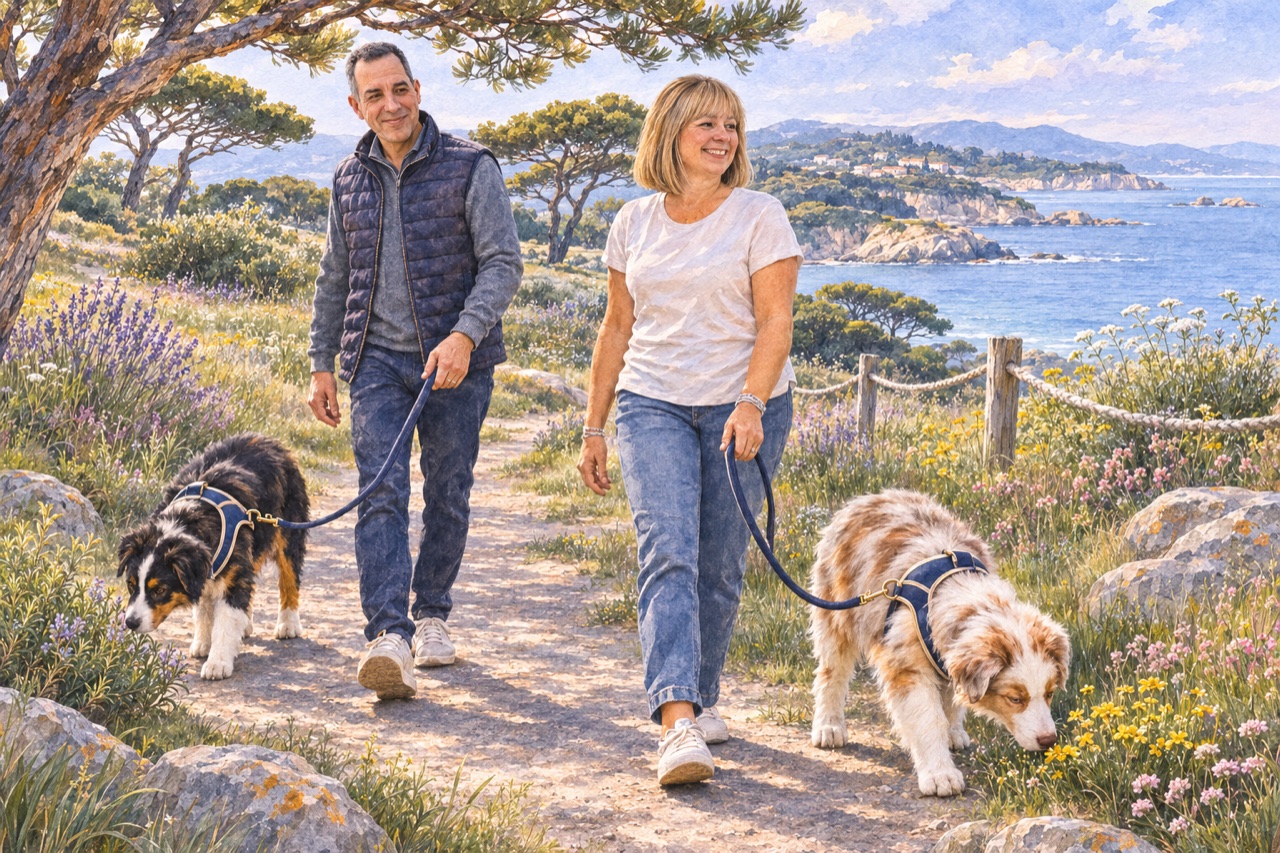
Understand the Aussie without a stereotype[1][2]
A herding history may show in a willingness to work together and sensitivity to movement. It does not set the same timetable for every dog. Look at your own companion: interests, age and recovery matter more than a breed label.
Fit activity around their life[2][3]
Combine suitable walks with time together; having land is not enough by itself. Adjust amount and intensity to health, fitness and the day’s conditions. Make changes gradually and watch the response rather than chasing a universal hourly quota.
A body still developing[4]
For a puppy, exploring at their own pace and supervised play offer alternatives to joining your runs or long hikes. Save repeated impacts, jumps and turns for appropriate development and preparation. Five minutes per month is not a scientific formula; your vet can advise on exercise and outings in light of growth and disease protection.
An invitation rather than a test[5][6]
A small, achievable problem can be a good experience. Alternate sniffing, food toys and reward-based skills. Allow success; if your dog persists in frustration or leaves, adjust the activity. Mental enrichment does not mean demanding constant performance.
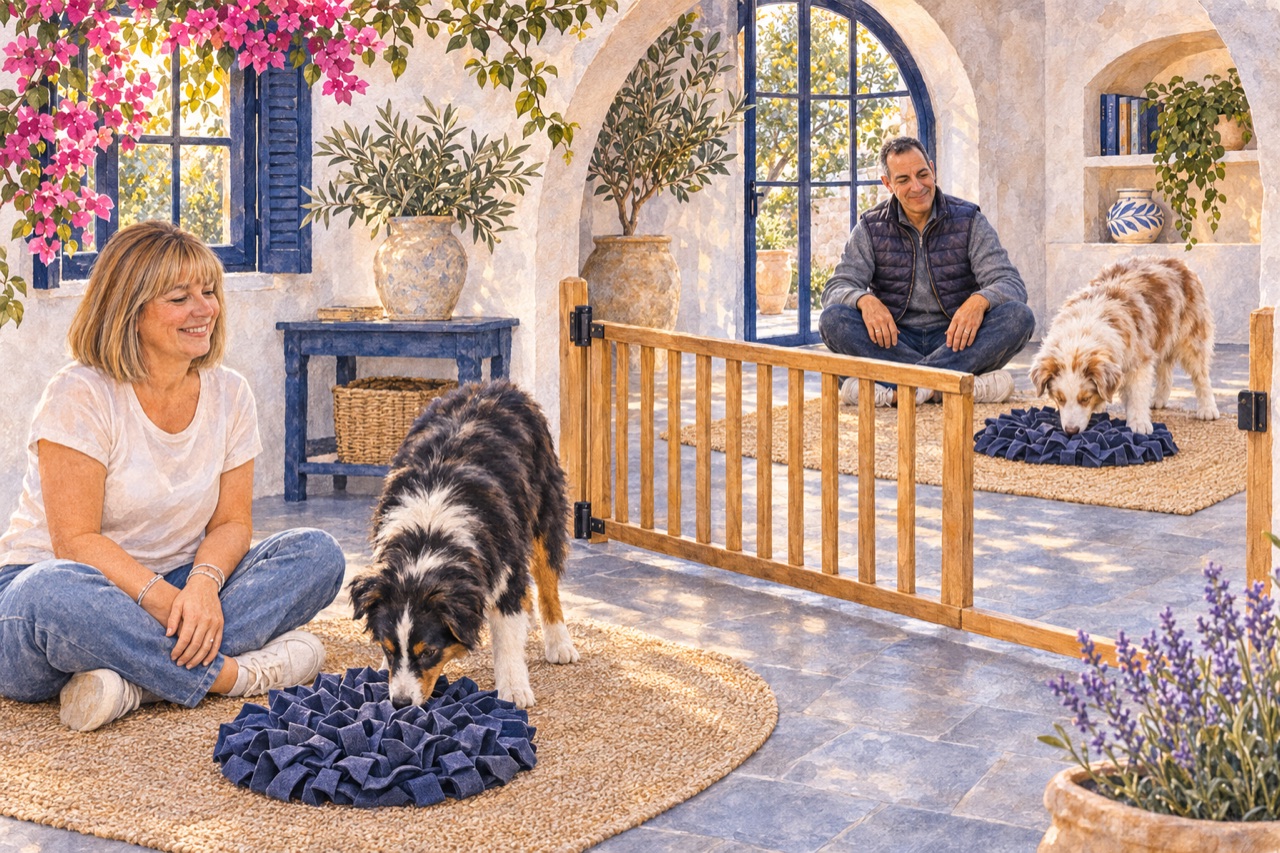
Three invitations to spend time together[5][6][9]
A search in plain sight
Show a few pieces of daily food on a clean floor, then give space to investigate. Easy success makes a good start.
One small skill
Present your hand near the nose and reward a voluntary approach. A few successes are enough to finish well.
Food to discover
Offer an easy food toy, safe for their size, under supervision. Remove it if damaged or if your dog tries to ingest fragments.
Learning to slow down[7]
Rest needs its own place and time, water and few interruptions. If play leaves your dog wound up, review the whole day before adding another session. Learning to relax deserves support too.
See also: learning to rest and settle →
If you would enjoy a dog sport[2][4]
A fit, prepared adult may enjoy scent work, obedience or agility. Choose by preference, not a supposed breed obligation. Discuss readiness for sustained effort and impact with your vet and progress with competent guidance.
Sky and Dylan: respect two different rhythms
Scenes with both remind us that living together does not erase differences. Each dog needs individual attention. Separate food games and searches to avoid competition and adapt walks to each dog’s ability.
Listen when it is time to stop[3][8]
Frustration calls for an easier task or a break. Limping, pain or difficulty keeping up mean stopping and seeking veterinary assessment. In heat or humidity, reduce effort and prioritise cool surroundings, shade and water. Persistent heavy panting, weakness or poor coordination require cooling with water and airflow and urgent veterinary contact.
Before you begin
Frequently asked questions
Does an Aussie need to be busy all the time?
They also need rest and quiet moments. Suitable activities meet a willingness to cooperate; it does not require a nonstop agenda or exercise to exhaustion.
What if they ask for more ball throws?
Wanting to continue does not make repetition the best choice. Mix in lower-impact activities and avoid repeated sudden stops, turns and jumps, especially during growth.
Does sniffing for a while equal an hour’s walk?
There is no reliable equivalence. Movement and enrichment have complementary roles; when health or weather limits activity, plan alternatives with veterinary guidance.